


Preclinical Efficacy and Mechanistic Insights of Polyphenols Targeting the NLRP3 Inflammasome in Cardiometabolic Diseases: A Systematic Review
- Biomedical Science Master Program, Faculty of Medicine, Universitas Brawijaya, Malang, Indonesia
- Department of Pharmacology, Faculty of Medicine, Universitas Brawijaya, Malang, Indonesia
- Department of Cardiology and Vascular Medicine, Faculty of Medicine, Universitas Brawijaya, Malang, Indonesia
- Doctoral Program in Medical Science, Faculty of Medicine, Universitas Brawijaya, Malang, Indonesia
- Cardiovascular Research Center, Universitas Brawijaya, Malang, Indonesia
Abstract
Background: The nucleotide-binding oligomerization domain-like receptor family pyrin domain-containing 3 (NLRP3) inflammasome is a central mediator of cardiometabolic inflammation. Its activation promotes the maturation and release of interleukin-1β (IL-1β) and interleukin-18 (IL-18), accelerating vascular endothelial dysfunction, metabolic dysregulation, and tissue injury. Although polyphenols have shown promising therapeutic potential as natural modulators of this pathway, preclinical evidence remains fragmented across diverse experimental models. This systematic review synthesized in vitro and in vivo preclinical evidence regarding the efficacy and molecular mechanisms of polyphenols targeting NLRP3 inflammasome activation in cardiometabolic diseases.
Methods: This review adhered to the Preferred Reporting Items for Systematic Reviews and Meta-Analyses (PRISMA) 2020 statement and was prospectively registered in PROSPERO Animal (CRD420251232088). A comprehensive literature search was executed across PubMed, ScienceDirect, BioMed Central (BMC), and Google Scholar for studies published between 2020 and 2025. Original in vitro and in vivo preclinical studies evaluating polyphenol interventions on NLRP3 inflammasome-related outcomes in cardiometabolic disease models were included. Methodological risk of bias was assessed using the Systematic Review Centre for Laboratory Animal Experimentation (SYRCLE) tool for in vivo animal studies and the Quality Assessment Tool for In Vitro Studies (QUIN) for cell-based studies.
Results: Six studies met the inclusion criteria. Polyphenolic compounds and formulations—including quercetin, salvianolic acid A, curcumin, 6-shogaol, Qiqilian capsule, and Qian Yang Yu Yin Granule—consistently attenuated NLRP3 inflammasome activation. These interventions suppressed the expression and assembly of NLRP3, apoptosis-associated speck-like protein containing a CARD (ASC), and cleaved caspase-1, thereby decreasing IL-1β and IL-18 secretion. Mechanistically, polyphenols conferred cardioprotective and vasculoprotective benefits through the suppression of oxidative stress and mitochondrial reactive oxygen species (ROS), downregulation of Akt/nuclear factor-kappa B (NF-κB) priming signaling, restoration of autophagic flux, and upregulation of nuclear factor erythroid 2-related factor 2 (Nrf2)-mediated antioxidant pathways.
Conclusion: Preclinical evidence demonstrates that polyphenols act as multitarget modulators of the NLRP3 inflammasome pathway, offering promising therapeutic strategies for cardiometabolic disorders. However, substantial methodological heterogeneity across preclinical models and a lack of pharmacokinetic and clinical data highlight the need for standardized study designs and early-phase clinical trials to facilitate translational application.
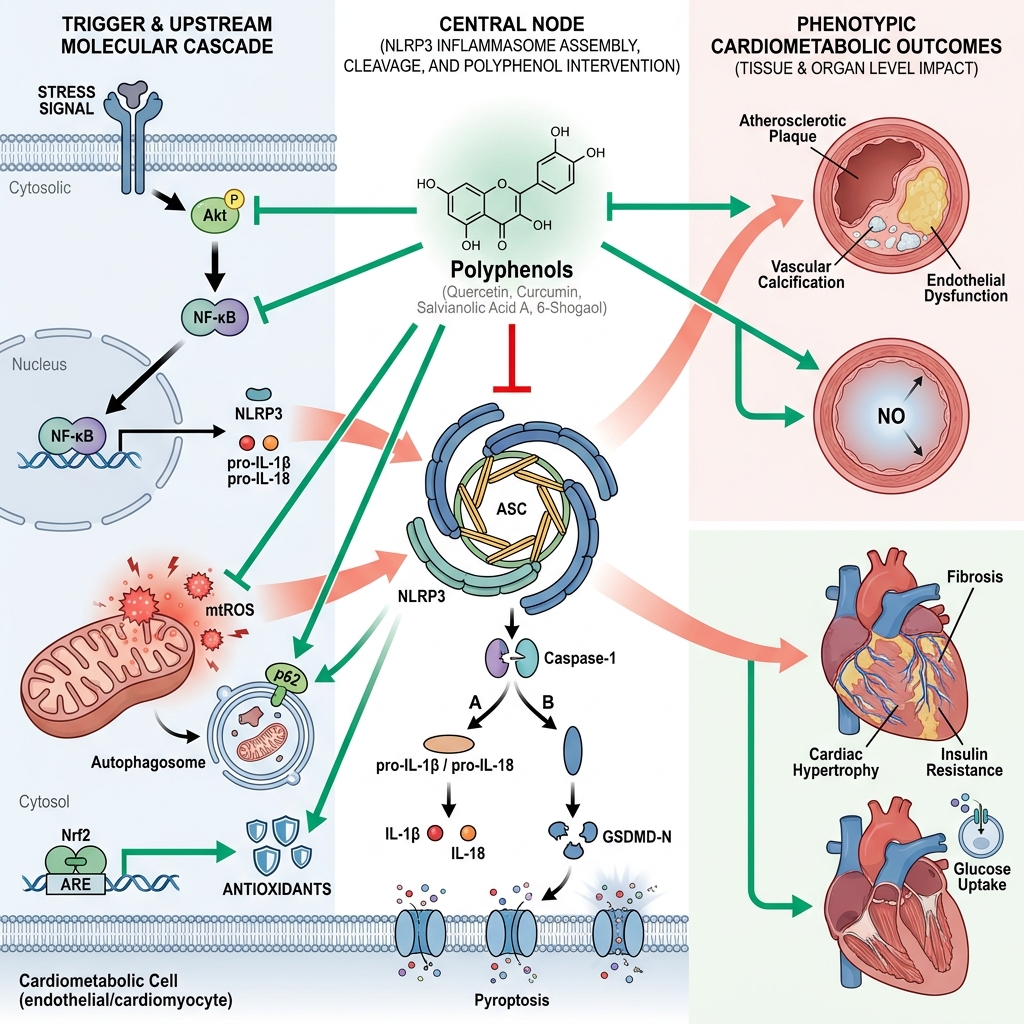
Graphical abstract
Introduction
Cardiometabolic diseases represent a major global health burden driven by chronic low-grade inflammation that disrupts cardiovascular and metabolic homeostasis1. Metabolic stress and inflammatory signaling pathways are intricately interconnected, positioning systemic inflammation at the core of disease pathogenesis and progression2. The nucleotide-binding oligomerization domain-like receptor family pyrin domain-containing 3 (NLRP3) inflammasome functions as a pivotal molecular sensor linking metabolic perturbation to innate immune activation3. Pathological stressors, including nutrient excess, lipotoxicity, mitochondrial dysfunction, elevated oxidative stress, and gut dysbiosis, trigger NLRP3 inflammasome assembly3. Upon activation, NLRP3 recruits the adaptor protein apoptosis-associated speck-like protein containing a CARD (ASC) and pro-caspase-1, facilitating caspase-1 maturation and the subsequent cleavage and secretion of interleukin-1β (IL-1β) and interleukin-18 (IL-18)4,5. These proinflammatory cytokines exacerbate vascular endothelial dysfunction, accelerate atherosclerotic plaque progression, promote adverse cardiac remodeling, and disrupt glycemic and lipid homeostasis4,5.
Although the NLRP3 inflammasome represents a compelling therapeutic target, the clinical development and translation of synthetic small-molecule NLRP3 inhibitors have been hindered by off-target toxicities, adverse pharmacokinetics, and poor oral bioavailability6,7,8. Consequently, polyphenols—a diverse class of secondary plant metabolites abundant in dietary sources—have gained significant attention as potential natural modulators of inflammasome-driven inflammation9. Preclinical investigations have indicated that polyphenolic agents, such as quercetin, curcumin, epigallocatechin-3-gallate (EGCG), salvianolic acids, 6-shogaol, and chlorogenic acid, mitigate NLRP3 inflammasome activation by suppressing nuclear factor-kappa B (NF-κB) transcriptional priming, quenching reactive oxygen species (ROS), and preserving mitochondrial integrity10. Nevertheless, current preclinical findings remain heterogeneous regarding experimental designs, disease models, dosing regimens, and evaluated signaling cascades. Therefore, this systematic review synthesizes recent in vitro and in vivo preclinical evidence evaluating the efficacy and molecular mechanisms of polyphenols targeting the NLRP3 inflammasome in cardiometabolic disease models to clarify their therapeutic relevance and identify critical knowledge gaps.
Materials and Methods
Research Design
This systematic review synthesized preclinical evidence regarding the regulatory effects and underlying mechanisms of polyphenols on NLRP3 inflammasome activation in cardiometabolic disease models. The protocol was prospectively registered in the PROSPERO Animal register (CRD420251232088) and conducted in strict accordance with the Preferred Reporting Items for Systematic Reviews and Meta-Analyses (PRISMA) 2020 statement. The primary research question was formulated using an adapted Population, Intervention, Comparison, Outcome (PICO) framework for preclinical research (Table 1).
Description of the adapted Population, Intervention, Comparison, and Outcome (PICO) framework for preclinical study eligibility.
| Component | Study Description |
|---|---|
| Population | |
| Intervention | Polyphenol-based interventions (quercetin, salvianolic acid A, curcumin, 6-shogaol), polyphenol-rich extracts, and polyphenol-standardized herbal formulations (Qiqilian capsule, QYYYG). |
| Comparison | Untreated controls, vehicle controls, sham controls, or pharmacological positive controls (atorvastatin, valsartan, MCC950, NAC). |
| Outcome | Primary: NLRP3 expression/activation, ASC, caspase-1, mature IL-1β, IL-18. Secondary: ROS, MDA, SOD, pyroptosis, autophagic flux (LC3, p62), functional endpoints (endothelial dysfunction, plaque area, hypertrophy, fibrosis). |
Search Methods
A comprehensive literature search was conducted to identify mechanistic preclinical studies investigating polyphenol interventions targeting NLRP3 inflammasome signaling in models of cardiometabolic disease. Electronic databases including PubMed, BioMed Central (BMC), ScienceDirect, and Google Scholar were systematically searched. The search strategy was tailored to capture contemporary mechanistic studies evaluating inflammasome-related molecular cascades in both in vitro cell culture systems and in vivo animal models.
The search was restricted to peer-reviewed articles published between January 1, 2020, and December 31, 2025, to capture the latest advances following the rapid expansion of NLRP3 inflammasome research in cardiometabolic pathophysiology. Studies published within this timeframe offer detailed molecular characterizations of inflammasome-associated signaling, including mitochondrial oxidative stress, pyroptosis, autophagy, and the NF-κB/Nrf2 axes, compared with earlier exploratory reports. Limiting the search window also ensured greater methodological consistency across experimental models, molecular assays, and phenotypic outcome assessments.
Medical Subject Headings (MeSH) and free-text keywords were combined using Boolean logic operators (AND, OR). Search terms encompassed polyphenols, flavonoids, NLRP3 inflammasome, caspase-1, ASC, interleukins, pyroptosis, oxidative stress, cardiometabolic disease, atherosclerosis, diabetes, obesity, metabolic syndrome, and preclinical experimental models. The representative search string was formulated as follows:
Inclusion and Exclusion Criteria
Study selection followed the PRISMA 2020 guidelines. Original in vitro and in vivo preclinical studies published between 2020 and 2025 were eligible if they evaluated polyphenol interventions—including purified polyphenolic compounds, polyphenol-rich extracts, or polyphenol-standardized herbal formulations—in established models of cardiometabolic diseases (e.g., atherosclerosis, type 2 diabetes mellitus, obesity, hypertension-induced vascular dysfunction, hypertensive cardiac remodeling, and diabetic encephalopathy). Included studies were required to report mechanistic outcomes directly associated with NLRP3 inflammasome signaling, such as expression or activity levels of NLRP3, ASC, caspase-1, IL-1β, IL-18, oxidative stress markers, or pyroptosis-related indicators. Only peer-reviewed, full-text original articles published in English were considered. Exclusion criteria comprised: (1) clinical trials or human observational studies; (2) review articles, meta-analyses, editorials, letters, and conference abstracts; (3) studies lacking mechanistic evaluation of the NLRP3 inflammasome axis; and (4) studies with primary outcomes unrelated to cardiometabolic inflammatory mechanisms. Following screening, six studies satisfied all criteria and were included in the qualitative synthesis.
Study Screening
Two reviewers independently screened all retrieved records through duplicate identification, title and abstract evaluation, and full-text eligibility assessment based on the predefined eligibility criteria. Any discrepancies or disagreements between the reviewers were resolved through discussion and consensus.
Data Extraction
Data extraction was performed independently by two reviewers using a standardized extraction form to minimize transcription errors and ensure consistency. Extracted parameters included: publication details (first author, publication year), experimental models (animal species, strains, cell lines, disease induction protocols), polyphenol interventions (compound/extract name, dosage, route of administration, treatment duration, vehicle controls), comparator groups, targeted molecular pathways, and specific NLRP3 inflammasome-related biomarkers (NLRP3, ASC, pro- and cleaved caspase-1, IL-1β, IL-18). Additional mechanistic endpoints—including oxidative stress markers (ROS, malondialdehyde [MDA], superoxide dismutase [SOD]), pyroptosis markers, autophagic indicators (LC3, p62, Beclin-1), and systemic metabolic/vascular parameters—were extracted when available. Discrepancies were resolved through mutual agreement.
Quality Appraisal
Methodological quality and risk of bias for in vivo animal studies were assessed using the Systematic Review Centre for Laboratory Animal Experimentation (SYRCLE) Risk of Bias tool, which covers 10 domains: sequence generation, baseline characteristics, allocation concealment, random housing, blinding of caregivers/investigators, random outcome assessment, blinding of outcome assessors, incomplete outcome data, selective outcome reporting, and other potential sources of bias11. Methodological quality and transparency of in vitro cell culture studies were appraised using the Quality Assessment Tool for In Vitro Studies (QUIN) across 12 criteria12,23.
Data Analysis
Due to substantial heterogeneity in experimental animal models, cell types, disease induction methods, compound formulations, dosing regimens, and analytical assays, quantitative meta-analysis was not feasible13. A qualitative narrative synthesis was conducted. Findings were systematically categorized by experimental setting (in vivo vs. in vitro), disease models, specific polyphenol interventions, and molecular pathways involved.
Results
Study Selection
A total of 742 records were identified through database searches across PubMed (n = 118), ScienceDirect (n = 214), BioMed Central (n = 54), and Google Scholar (n = 356). Following the removal of 146 duplicate records, 596 titles and abstracts were screened. Of these, 464 records were excluded because they investigated irrelevant interventions (n = 177) or focused on non-cardiometabolic disease conditions (n = 287). The remaining 132 full-text articles were evaluated against the eligibility criteria, resulting in the exclusion of 126 studies due to: clinical/human study design (n = 45), review or non-original publication type (n = 40), absence of mechanistic evaluation of the NLRP3 inflammasome pathway (n = 23), or primary endpoints unrelated to cardiometabolic inflammatory mechanisms (n = 18). Ultimately, six preclinical studies met all inclusion criteria and were included in the final qualitative synthesis (Figure 1).
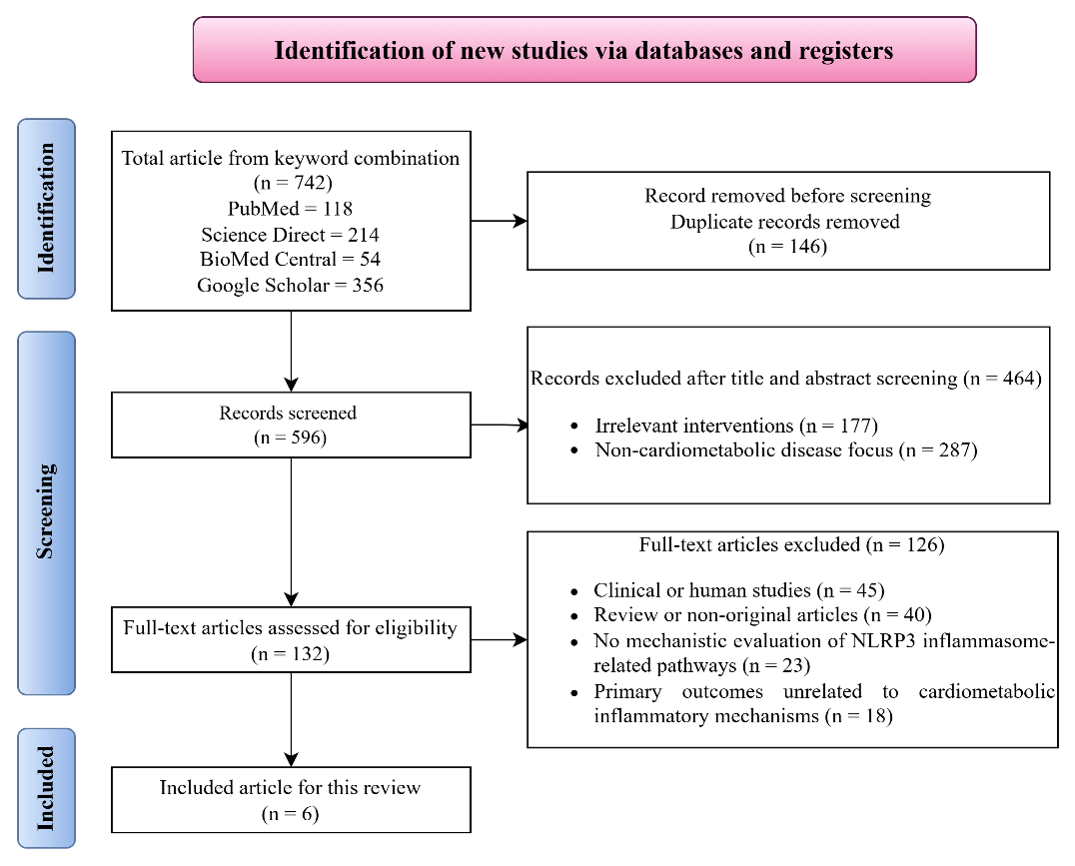
PRISMA 2020 flow diagram illustrating the literature search, screening, and study selection process. The flowchart depicts the systematic multi-stage identification, screening, eligibility appraisal, and inclusion of preclinical studies. Database searches yielded 742 initial records; 6 studies (5 in vivo and 4 in vitro datasets) met final criteria.
Characteristics of Included Studies
The six included studies published between 2020 and 2025 evaluated the modulatory effects of polyphenols on NLRP3 inflammasome activation across diverse preclinical models of cardiometabolic disease. The majority of studies were conducted in Asia, with additional research originating from Europe. Experimental systems comprised rodent in vivo models—including db/db mice, ApoE⁻/⁻ mice, spontaneously hypertensive rats (SHRs), and Zucker diabetic fatty (ZDF) rats—and primary or established cell lines, such as human umbilical vein endothelial cells (HUVECs), human aortic endothelial cells (HAECs), human artery smooth muscle cells (HASMCs), and H9c2 rat cardiomyoblasts. Evaluated interventions encompassed isolated polyphenols (quercetin, salvianolic acid A, curcumin, 6-shogaol) as well as polyphenol-standardized traditional herbal formulations (Qiqilian capsule and Qian Yang Yu Yin Granule [QYYYG]). All studies examined core inflammasome components (NLRP3, ASC, caspase-1, IL-1β, IL-18) along with upstream regulatory cascades, including NF-κB priming, mitochondrial ROS generation, Akt signaling, autophagic degradation, and Nrf2 antioxidant defense10,14,15,16. Study characteristics and key findings are summarized in Table 2 (in vivo studies) and Table 3 (in vitro studies).
Characteristics and mechanistic findings of included in vivo animal studies.
| Study | Therapy | Animal Model | Dosage / Route | Induction | Targeted Pathways & Outcomes |
|---|---|---|---|---|---|
| Hu (2020) | Quercetin | db/db mice | 35-70 mg/kg p.o. | Diabetic encephalopathy | Upregulated SIRT1; suppressed NLRP3; improved synapse/cognition. |
| Luo (2023) | Qiqilian (QQL) | SHRs | 0.3-1.2 g/kg p.o. | Hypertension-VED | Inhibited NLRP3-ASC; reduced ROS; restored autophagic flux. |
| Ma (2020) | SAA | ZDF rats | 0.5-1 mg/kg i.v. | T2DM / Atherosclerosis | Inhibited NF-κB/NLRP3; reduced lipids & systemic inflammation. |
| Ruan (2024) | Curcumin | ApoE⁻/⁻ mice | 100 mg/kg p.o. | Atherosclerosis | Suppressed NLRP3-ASC; reduced MDA/SOD; restored NO. |
| Xu (2025) | QYYYG | SHRs | 0.7-1.4 g/kg p.o. | Hypertensive remodeling | Activated Nrf2; inhibited ROS/NF-κB; reduced fibrosis/pyroptosis. |
Characteristics and molecular targets of included in vitro studies.
| Study | Compound | Cell Line | Model / Stimulus | Key Mechanistic Observations |
|---|---|---|---|---|
| Chen (2020) | 6-Shogaol | HASMCs | Hyperglycemia | Suppressed Akt/ROS/NLRP3; prevented vascular calcification. |
| Luo (2023) | QQL Serum | HUVECs | Ang II | Inhibited NLRP3-ASC; p62-dependent NLRP3 degradation. |
| Ruan (2024) | Curcumin | HAECs | ox-LDL | Downregulated NLRP3/ASC; scavenged intracellular ROS. |
| Xu (2025) | QYYYG Extract | H9c2 | Isoproterenol | Nrf2 translocation; inhibited ROS/NLRP3-mediated pyroptosis. |
Risk of Bias Assessment
Risk of bias assessment for the five in vivo animal studies using the SYRCLE tool revealed an overall unclear risk of bias, with no studies exhibiting a high risk of bias in any domain (Figure 2)11. Sequence generation (Domain 1) was rated as low risk in all five studies (100%). Baseline characteristics (Domain 2) were judged as low risk in two studies (Luo et al.18 and Ma et al.19) and unclear in the remaining three studies due to incomplete reporting. Allocation concealment (Domain 3), random housing (Domain 4), caregiver/investigator blinding (Domain 5), random outcome assessment (Domain 6), and outcome assessor blinding (Domain 7) were rated as unclear across all studies owing to insufficient methodological details in the published reports. Completeness of outcome data (Domain 8) and selective outcome reporting (Domain 9) were rated as low risk across all included studies. Other potential sources of bias (Domain 10) were assessed as low risk in two studies18,19 and unclear in three17,20,21.
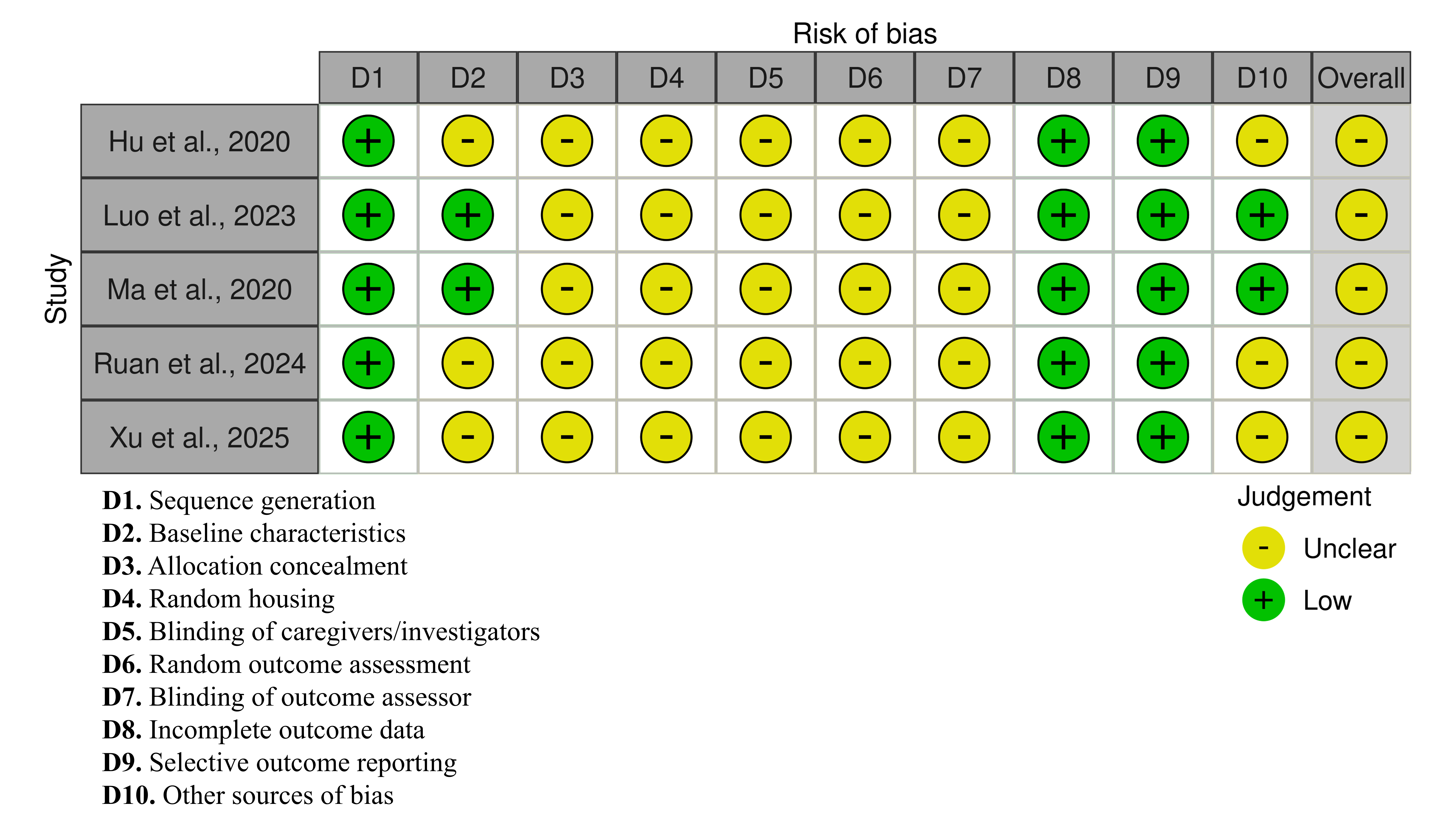
Methodological risk of bias assessment across the included in vivo animal studies using the SYRCLE tool. Matrix displaying risk judgments for five studies
Quality appraisal of the four in vitro studies using the QUIN tool demonstrated an overall low risk of bias profile (Figure 3)12,22. All four studies scored low risk for clearly stated aims/objectives (D1), sample size calculation details (D2), sampling technique explanation (D3), comparison group description (D4), methodological detail (D5), randomization (D7), outcome measurement methods (D8), statistical analysis (D11), and presentation of results (D12). Conversely, operator details (D6), outcome assessor details (D9), and blinding (D10) were consistently assessed as high risk across all studies because of omission of reporting for these parameters. Despite these specific reporting gaps, the in vitro studies demonstrated robust methodological execution and data reporting.
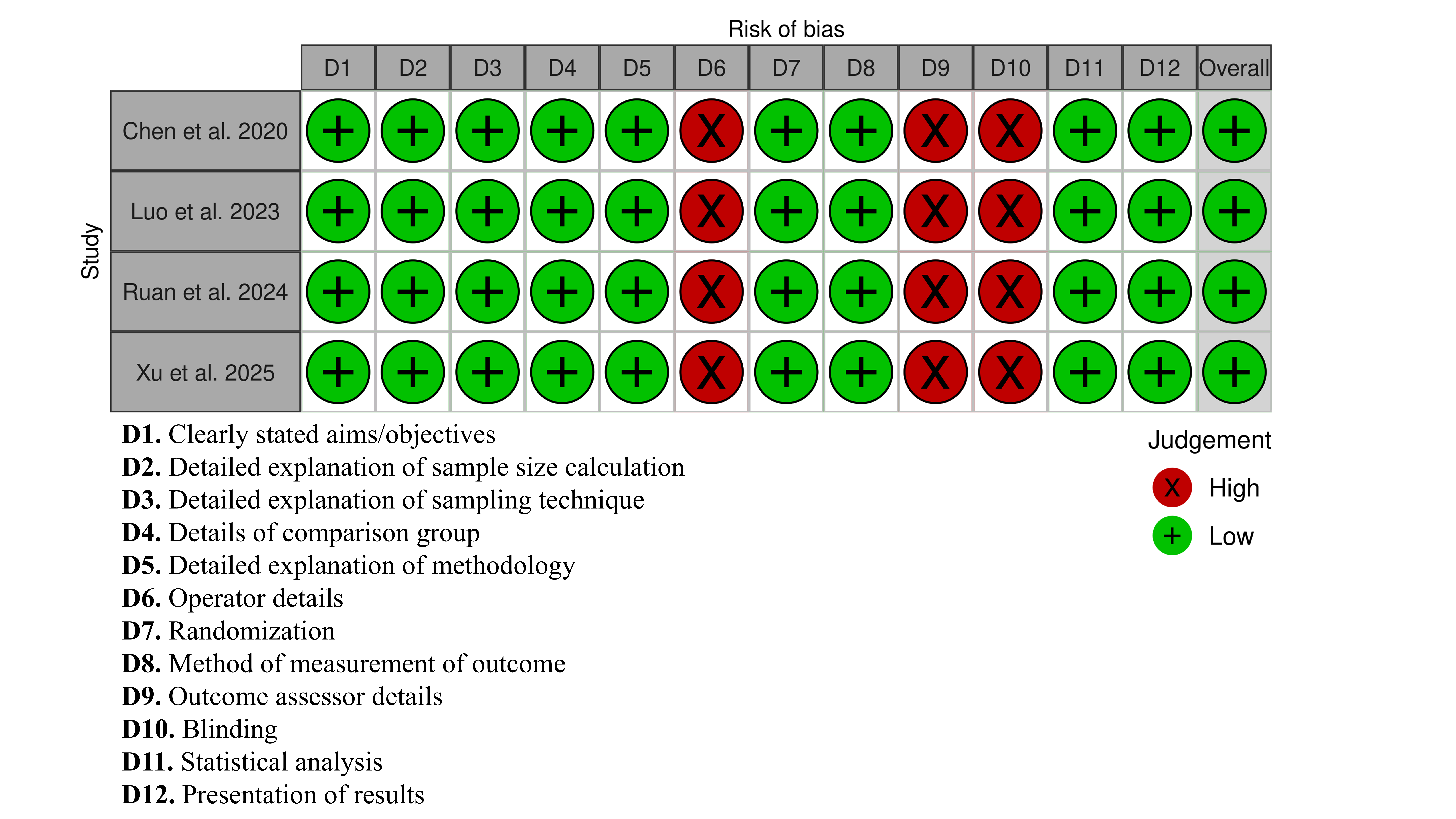
Methodological risk of bias assessment across the included in vitro cell culture studies using the QUIN tool. Summary of quality for four studies
Modulation of NLRP3 Inflammasome and Upstream Signaling Pathways by Polyphenols
Across both in vivo and in vitro models, polyphenol interventions consistently suppressed NLRP3 inflammasome assembly and downstream inflammatory cascades. In ApoE⁻/⁻ atherosclerotic mice, curcumin and salvianolic acid A (SAA) significantly downregulated protein expression of NLRP3, ASC, and cleaved caspase-1, leading to reduced maturation and release of IL-1β and IL-18 under proatherogenic stimuli such as oxidized low-density lipoprotein (ox-LDL) and vitamin D319,20. In db/db diabetic mice, quercetin upregulated SIRT1 expression and suppressed NLRP3 inflammasome components, attenuating neuroinflammation, synaptic dysfunction, and systemic insulin resistance17. In ZDF rats, SAA suppressed NLRP3 inflammasome activation via inhibition of NF-κB signaling, reducing circulating high-sensitivity C-reactive protein (hs-CRP), IL-1β, and IL-18 levels19.
In vitro investigations substantiated these molecular mechanisms. In hyperglycemic HASMCs, 6-shogaol inhibited Akt phosphorylation, suppressed intracellular ROS generation, and downregulated NLRP3, ASC, and caspase-1 activation, thereby preventing osteogenic transdifferentiation and vascular calcification15. In HUVECs exposed to angiotensin II (Ang II), Qiqilian-medicated serum suppressed NLRP3-ASC assembly, reduced ROS accumulation, and restored autophagic flux via p62-mediated NLRP3 clearance18. In HAECs, curcumin attenuated ox-LDL-induced endothelial injury and pyroptosis by suppressing ROS production and blocking NLRP3 inflammasome activation20. Similarly, in H9c2 cardiomyoblasts challenged with isoproterenol (ISO), QYYYG activated the Nrf2 antioxidant axis and inhibited the ROS/NF-κB/NLRP3 signaling cascade, preventing oxidative injury and cardiomyocyte pyroptosis21. Upstream mechanistic targets across these studies included: (1) attenuation of intracellular and mitochondrial ROS generation15,18,19,20,21; (2) suppression of Akt and NF-κB signaling pathways responsible for transcriptional priming of NLRP3 and pro-IL-1β15,19,21; (3) enhancement of autophagic flux facilitating lysosomal degradation of inflammasome components18,20; and (4) upregulation of Nrf2-mediated antioxidant defenses20,21.
Effects on Cardiometabolic Outcomes
Suppression of the NLRP3 inflammasome by polyphenols translated into broad improvements in structural, functional, and biochemical cardiometabolic endpoints. In models of atherosclerosis, curcumin and SAA markedly reduced aortic plaque area, lipid deposition, and macrophage infiltration in ApoE⁻/⁻ and ZDF rodents, accompanied by significant reductions in serum hs-CRP, tumor necrosis factor-alpha (TNF-α), interleukin-6 (IL-6), and total cholesterol19,20. In hypertension-induced vascular and cardiac injury models, Qiqilian capsule improved endothelium-dependent vasodilation, preserved vascular structural integrity, and corrected pathological autophagy in SHRs18, whereas QYYYG attenuated left ventricular hypertrophy, reduced interstitial fibrosis, and suppressed cardiac expressions of collagen I, collagen III, and alpha-smooth muscle actin (α-SMA)21. At the cellular level, polyphenol treatments protected vascular endothelial cells from ox-LDL- and Ang II-induced pyroptotic cell death18,20, suppressed osteogenic differentiation markers (osteopontin [OPN], osteocalcin [OCN], and alkaline phosphatase [ALP]) in vascular smooth muscle cells15, and preserved cardiomyocyte viability under hypertrophic stress21.
Summary of Evidence Patterns
In summary, preclinical evidence consistently demonstrates that polyphenols exert potent inhibitory effects against NLRP3 inflammasome signaling in cardiometabolic disease models. The primary molecular mechanisms involve a multi-pronged mode of action: suppressing transcriptional priming via NF-κB/Akt inhibition, reducing trigger signals by scavenging mitochondrial ROS and activating Nrf2, and facilitating clearance of inflammasome components through autophagy restoration. These molecular actions collectively reduce caspase-1 activation and mature IL-1β/IL-18 release, leading to significant protection against atherogenesis, endothelial dysfunction, hypertensive cardiac remodeling, and diabetic complications.
Discussion
The NLRP3 inflammasome has emerged as a central orchestrator of cardiovascular and cardiometabolic diseases, serving as a critical molecular bridge between metabolic stress, oxidative damage, and innate immune activation4,5,24,25. In response to pathogen-associated molecular patterns (PAMPs) and danger-associated molecular patterns (DAMPs), canonical NLRP3 activation proceeds through a two-step process: (1) a priming step mediated by pattern recognition receptors (such as TLR2/4/6, IL-1R, and RAGE) that activates NF-κB, driving the transcriptional upregulation of NLRP3, pro-IL-1β, and pro-IL-18; and (2) an activation step triggered by stimuli such as cholesterol crystals, oxidized LDL, advanced glycation end-products (AGEs), extracellular ATP (via P2X7R), and calcium influx, which promotes mitochondrial ROS production, NEK7 recruitment, and NLRP3 oligomerization with ASC and pro-caspase-126,27,28,29,30,31,32,33. The resulting catalytic cleavage of pro-caspase-1 into active caspase-1 facilitates the proteolytic maturation and release of IL-1β and IL-18, while cleaving gasdermin D (GSDMD) to execute pyroptotic cell death4,5,24,25. Extensive evidence from LDLR⁻/⁻ and ApoE⁻/⁻ rodent models demonstrates that genetic deletion or pharmacological inhibition of NLRP3 pathway constituents substantially diminishes atherosclerotic plaque burden, vascular inflammation, and adverse cardiac remodeling27,32,33.
Polyphenolic compounds—including resveratrol, curcumin, quercetin, epigallocatechin-3-gallate (EGCG), salvianolic acid A, and 6-shogaol—exert cardioprotective and vasculoprotective effects by acting as multitarget modulators of the NLRP3 inflammasome network34,35,36,37,38. For instance, resveratrol attenuates doxorubicin-induced cardiotoxicity and post-infarction myocardial remodeling through the inhibition of NLRP3 inflammasome assembly and downregulation of the TGF-β1/SMAD2 pathway36,37. Curcumin and quercetin reduce NF-κB activation, lower systemic hs-CRP, and inhibit NLRP3-dependent cytokine maturation in diabetic and pulmonary hypertensive vascular models38,39, while EGCG prevents high glucose-induced inflammasome activation and improves glucose tolerance40.
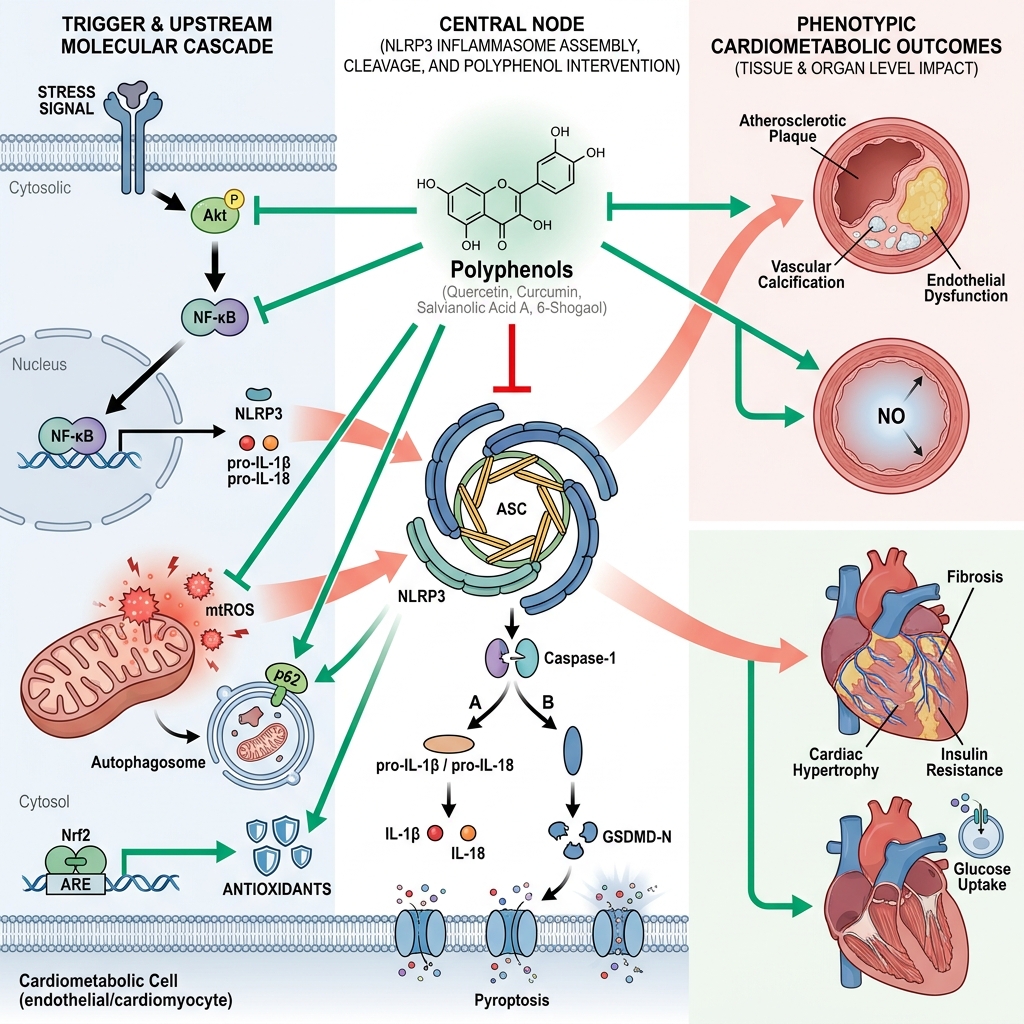
The synthesized findings in this review highlight that polyphenols operate predominantly upstream of the inflammasome complex rather than acting as narrow, single-target direct inhibitors (Figure 4)41,42. Specifically, polyphenols: (1) attenuate transcriptional priming by inhibiting Akt, MAPK, and NF-κB signaling; (2) diminish trigger-induced assembly by mitigating mitochondrial dysfunction, scavenging ROS, and activating the Keap1/Nrf2 antioxidant response pathway; and (3) enhance autophagic degradation of NLRP3 and ASC aggregates via p62/sequestosome-1 pathways15,18,19,20,21,39,40. This multi-tiered regulatory mechanism attenuates vascular inflammation, prevents endothelial pyroptosis, suppresses vascular smooth muscle calcification, and mitigates myocardial fibrosis and hypertrophy41,42.
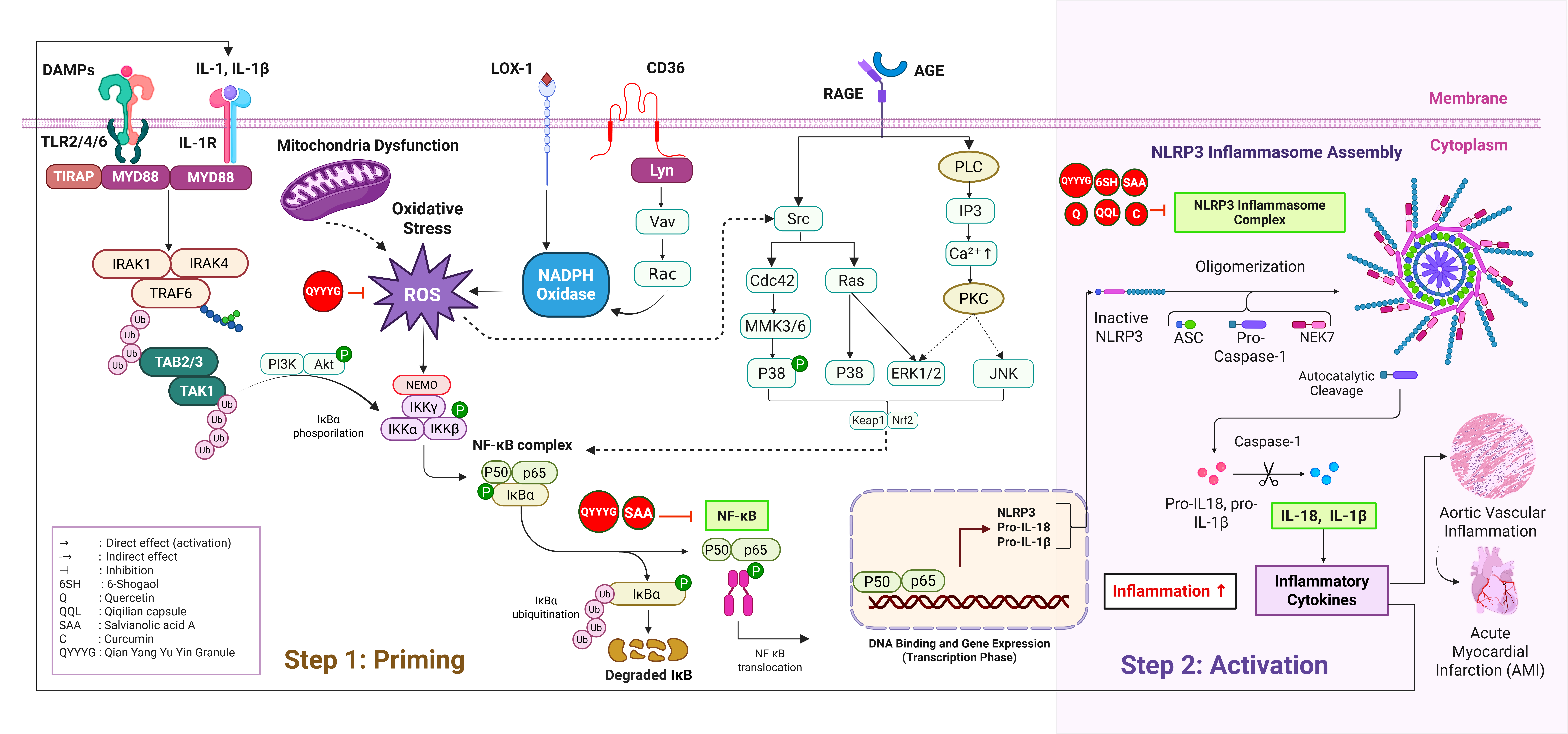
Schematic illustration of the molecular mechanisms and inhibitory targets of polyphenolic compounds within the NLRP3 inflammasome signaling pathway. The diagram illustrates the two-step activation mechanism and polyphenol targets. Step 1 (Priming): SAA and QYYYG inhibit NF-κB activation. Step 2 (Activation): QYYYG, 6-shogaol, and SAA quench ROS; QQL and curcumin suppress assembly. Polyphenols also stimulate Nrf2 and enhance autophagy.
Despite these promising preclinical findings, several translational limitations must be acknowledged. First, the included in vivo and in vitro studies exhibited notable methodological heterogeneity regarding disease models, compound dosing, and experimental duration. Second, risk of bias assessments revealed incomplete reporting of key methodological domains in animal studies, such as allocation concealment, random housing, and investigator blinding. Third, polyphenols generally display low systemic bioavailability, rapid phase II metabolism, and poor water solubility in vivo, which limits the direct translation of nominal in vitro concentrations to clinical settings. Future research should prioritize standardized preclinical study designs, novel delivery systems (e.g., nanoparticle encapsulation, liposomal formulations) to improve polyphenol bioavailability, and well-designed early-phase clinical trials to evaluate therapeutic efficacy and safety in human cardiometabolic diseases.
Conclusion
Current preclinical evidence indicates that polyphenols act as effective multitarget modulators of the NLRP3 inflammasome signaling cascade in cardiometabolic diseases. By mitigating oxidative stress, inhibiting Akt/NF-κB priming pathways, restoring autophagic flux, and activating Nrf2-mediated antioxidant responses, polyphenols attenuate caspase-1 activation and IL-1β/IL-18 maturation, thereby reducing atherosclerosis, endothelial dysfunction, vascular calcification, and cardiac remodeling. However, clinical translation remains constrained by methodological variability, uncharacterized pharmacokinetics, and a lack of robust human trials. Future efforts should focus on standardized preclinical methodologies, advanced bioavailability-enhancing delivery platforms, and rigorously designed clinical trials to determine the clinical utility of polyphenol-based therapeutics in cardiometabolic medicine.
Abbreviations
6-SH (6-Shogaol), AGE (Advanced glycation end-product), Akt (Protein kinase B), ALP (Alkaline phosphatase), Ang II (Angiotensin II), ApoE (Apolipoprotein E), ASC (Apoptosis-associated speck-like protein containing a CARD), BMC (BioMed Central), CD36 (Cluster of differentiation 36), DAMPs (Danger-associated molecular patterns), EGCG (Epigallocatechin-3-gallate), GSDMD (Gasdermin D), HAEC (Human aortic endothelial cell), HASMC (Human artery smooth muscle cell), HFD (High-fat diet), hs-CRP (High-sensitivity C-reactive protein), HUVEC (Human umbilical vein endothelial cell), IL-1β (Interleukin-1 beta), IL-6 (Interleukin-6), IL-10 (Interleukin-10), IL-18 (Interleukin-18), ISO (Isoproterenol), LDH (Lactate dehydrogenase), LDLR (Low-density lipoprotein receptor), MAPK (Mitogen-activated protein kinase), MCP-1 (Monocyte chemoattractant protein-1), MDA (Malondialdehyde), NF-κB (Nuclear factor-kappa B), NLRP3 (Nucleotide-binding oligomerization domain-like receptor family pyrin domain-containing 3), Nrf2 (Nuclear factor erythroid 2-related factor 2), OCN (Osteocalcin), OPN (Osteopontin), ox-LDL (Oxidized low-density lipoprotein), PICO (Population, Intervention, Comparison, Outcome), PRISMA (Preferred Reporting Items for Systematic Reviews and Meta-Analyses), PROSPERO (International Prospective Register of Systematic Reviews), QQL (Qiqilian capsule), QUIN (Quality Assessment Tool for In Vitro Studies), QYYYG (Qian Yang Yu Yin Granule), ROS (Reactive oxygen species), SAA (Salvianolic acid A), SHR (Spontaneously hypertensive rat), SIRT1 (Sirtuin 1), SOD (Superoxide dismutase), SYRCLE (Systematic Review Centre for Laboratory Animal Experimentation), T2DM (Type 2 diabetes mellitus), TNF-α (Tumor necrosis factor-alpha), VED (Vascular endothelial dysfunction), and ZDF (Zucker diabetic fatty)
Acknowledgments
The authors express their sincere gratitude to all individuals and institutions who contributed to the completion of this systematic review. This research was supported by the Program Pendidikan Magister menuju Doktor untuk Sarjana Unggul (PMDSU), which provided financial assistance, research facilities, and academic support throughout the study. The funding body played no role in the study design, literature search, data extraction, analysis, interpretation, manuscript drafting, or decision to submit for publication.
Author’s contributions
Conceptualization, methodology, literature search, study screening, data extraction, quality appraisal, formal analysis, and drafting of the original manuscript were performed by the authors. All authors reviewed, critically revised, and approved the final version of the manuscript.
Funding
This study received financial support from the Program Pendidikan Magister menuju Doktor untuk Sarjana Unggul (PMDSU). The funding body had no role in study design, data collection and analysis, decision to publish, or preparation of the manuscript.
Availability of data and materials
All data generated or analyzed during this systematic review are included within this published article and its accompanying tables and figures. Additional dataset details are available from the corresponding author upon reasonable request.
Ethics approval and consent to participate
Not applicable. This study is a systematic review of previously published preclinical literature and did not involve direct experimentation with human participants or live animals by the review authors.
Consent for publication
Not applicable.
Declaration of generative AI and AI-assisted technologies in the writing process
During the preparation of this manuscript, the authors utilized AI-assisted language editing tools solely for the purpose of improving English language fluency, grammar, and scientific medical style. The authors reviewed and edited the content as needed and take full responsibility for the integrity, accuracy, and scientific content of the publication.
Competing interests
The authors declare that they have no competing financial or non-financial interests that could have appeared to influence the work reported in this paper.