

Cytochrome P450 Pharmacogenomics in Antimicrobial Therapy: Genotype, Phenoconversion, and the Path to Precision Individualized Dosing
- Clinical Pharmacy Department, College of Pharmacy, University of Mashreq, Baghdad, Iraq
- Department of Molecular Biology, Institute of Genetic Engineering and Biotechnology, University of Baghdad, Baghdad, Iraq
- Department of Pharmacy, Al-Rasheed University College, Baghdad, Iraq
- Department of Anesthesia Techniques, College of Health and Medical Technologies, University of Mashreq, Baghdad, Iraq
Abstract
Background: Cytochrome P450 (CYP450) enzymes play a central role in the metabolism of diverse antimicrobial agents, contributing to substantial interindividual variability in therapeutic efficacy and toxicity. Genetic polymorphisms—predominantly single nucleotide polymorphisms (SNPs) and copy number variations (CNVs)—underlie four primary metabolizer phenotypes: poor (PM), intermediate (IM), normal/extensive (NM/EM), and ultra-rapid (UM). Inherited variants across genes encoding CYP2C19, CYP2C9, CYP2D6, and CYP3A4 significantly alter the pharmacokinetics and clinical outcomes associated with several major antimicrobial classes.
Methods: This narrative review synthesizes literature retrieved from PubMed/MEDLINE, Embase, Scopus, Web of Science, and the Cochrane Library (2015–2026) addressing CYP450 pharmacogenomics, phenoconversion, and antimicrobial pharmacokinetics.
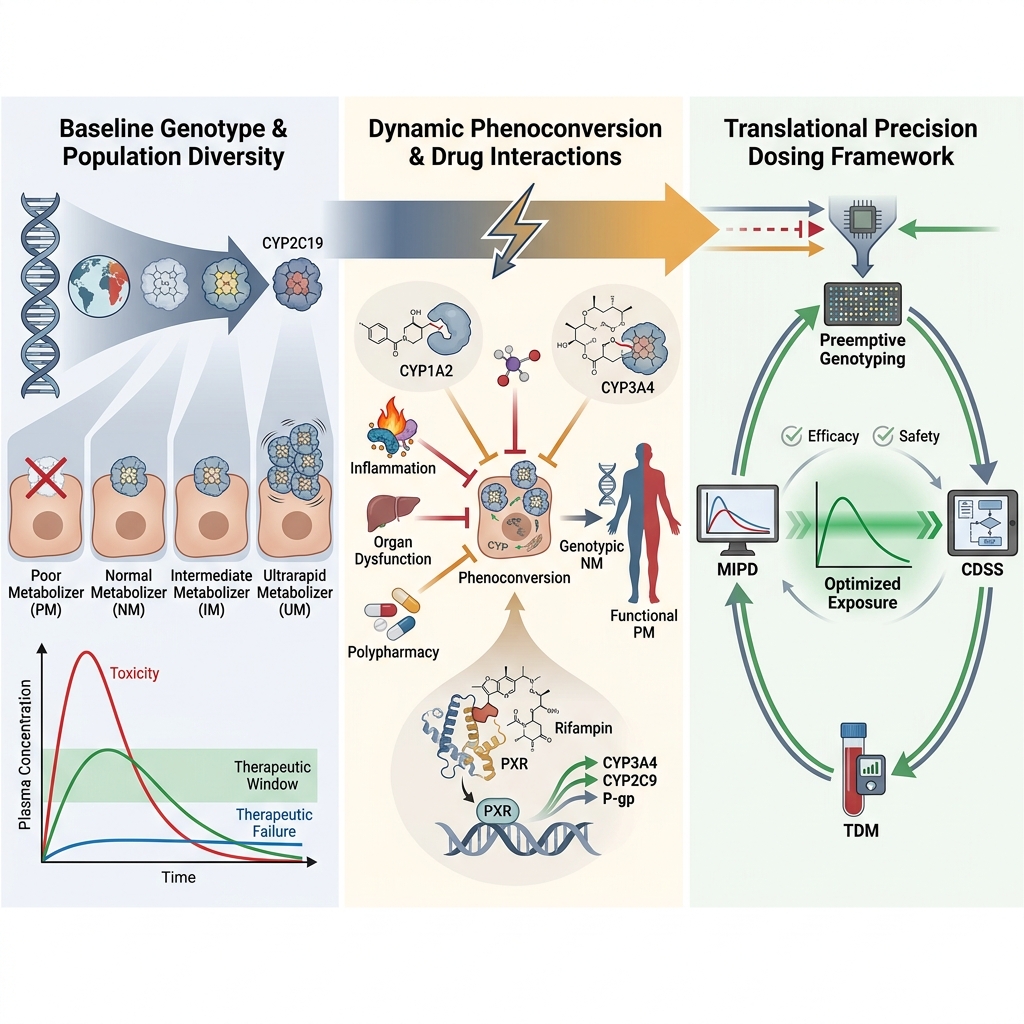
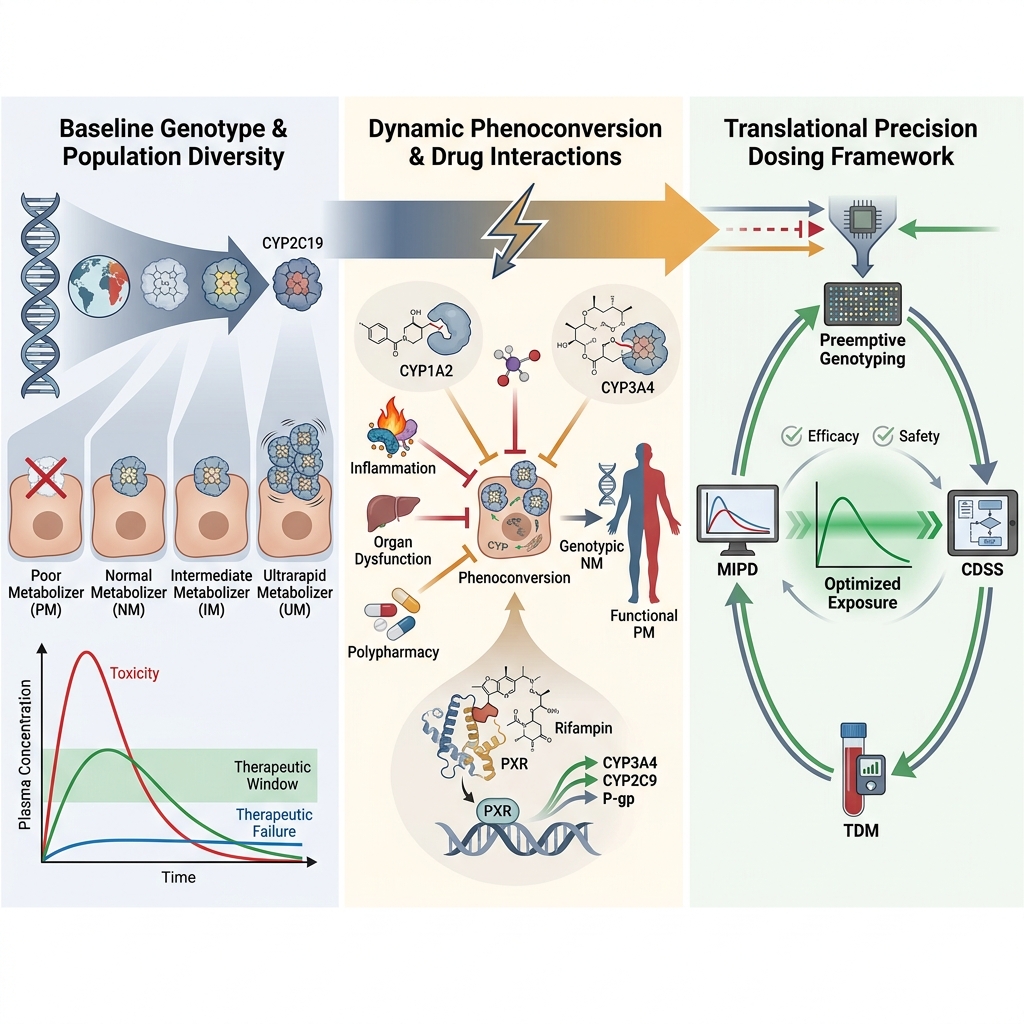
Key Findings: Voriconazole clearance mediated by CYP2C19 exemplifies the clinical utility of pharmacogenomics, wherein poor metabolizers exhibit elevated drug concentrations predisposing to hepatotoxicity and neurotoxicity, while ultra-rapid metabolizers experience subtherapeutic exposure and therapeutic failure. Quantitatively, CYP2C19 poor metabolizers exhibit voriconazole trough concentrations (Ctrough) and area under the concentration–time curve (AUC) values approximately 3- to 4-fold higher than normal metabolizers, whereas ultra-rapid metabolizers frequently fail to sustain target therapeutic troughs (>1–2 mg/L). Furthermore, irreversible mechanism-based inhibition (MBI) of CYP3A4 by macrolides (e.g., clarithromycin) precipitates clinically profound drug–drug interactions (DDIs) with co-administered narrow-therapeutic-index substrates, such as warfarin and statins. Beyond germline genetics, transient phenoconversion driven by concomitant enzyme inhibitors, inducers, or systemic inflammation dynamically alters metabolic capacity, creating gene–drug–drug interactions (GDDIs) that complicate dosing in polypharmacy and critical-care settings. Although clinical decision support systems (CDSS) and therapeutic drug monitoring (TDM) are increasingly utilized, conventional static genotyping fails to capture these real-time phenotypic shifts. Emerging artificial intelligence (AI) and machine learning (ML) models offer promising frameworks to integrate static genotypes, dynamic co-medication profiles, organ function, and TDM feedback for model-informed precision dosing (MIPD).
Conclusion: The paucity of prospective, multi-ethnic clinical trials and the lack of comprehensive, internationally harmonized prescribing guidelines currently limit widespread clinical translation. Pharmacogenomic principles should be systematically embedded within antimicrobial stewardship programs to optimize efficacy, minimize adverse events, and mitigate the emergence of antimicrobial resistance. AI-guided, multi-omics–driven precision medicine represents a transformative paradigm for the responsible, effective, and sustainable global use of antimicrobials.
Graphical abstract
Introduction
Overview of Antibiotic Use and Resistance Crisis
Antimicrobial agents—including antibiotics, antifungals, and antivirals—constitute a fundamental pillar of modern medicine, routinely administered worldwide to manage life-threatening infectious diseases. However, the sustained clinical efficacy of these therapies is increasingly imperiled by two interconnected global health crises: the accelerated emergence of antimicrobial resistance (AMR) and extensive interindividual variability in pharmacological response1. Optimal antimicrobial dosing is designed to maintain free drug concentrations at the target site of infection above the pathogen's minimum inhibitory concentration (MIC) for an adequate exposure duration, thereby maximizing microbial clearance and suppressing the emergence of resistant subpopulations. The governing pharmacokinetic/pharmacodynamic (PK/PD) index—whether time above MIC (fT > MIC), the peak concentration-to-MIC ratio (C/MIC), or the area under the concentration–time curve-to-MIC ratio (AUC/MIC)—is intrinsically class-dependent2. Unrecognized alterations in fundamental pharmacokinetic parameters, particularly metabolic clearance and systemic elimination, frequently disrupt this fragile equilibrium. Such deviations result in either subtherapeutic drug exposure, which fuels treatment failure and secondary resistance selection, or supratherapeutic accumulation, precipitating severe concentration-dependent toxicity and adverse drug reactions (ADRs)3.
Role of CYP450 Enzymes in Drug Metabolism
A primary determinant of interindividual pharmacokinetic variability is the superordinate superfamily of hemoprotein monooxygenases designated cytochrome P450 (CYP450)4. These heme-dependent oxidoreductases represent the central catalytic machinery of hepatic Phase I biotransformation, displaying their highest expression levels within hepatocytes and enterocytes5. CYP enzymes mediate the metabolic processing of numerous endogenous biochemical substrates—including steroid hormones, bile acids, fat-soluble vitamins, and procarcinogens—while simultaneously processing xenobiotic entities, accounting for the oxidative metabolism of approximately 75% of clinically prescribed pharmaceutical agents6. Mechanistically, these enzymes catalyze the insertion of a single atom of molecular oxygen into lipophilic drug substrates (principally via mono-hydroxylation, dealkylation, or epoxidation), thereby generating polar functional handles that facilitate subsequent Phase II conjugation (e.g., glucuronidation, sulfation, or glutathione conjugation) and ultimate excretion via renal or hepatobiliary pathways7. Consequently, CYP-mediated biotransformation serves as the primary gateway for the detoxification and systemic clearance of numerous lipophilic antimicrobials8.
Crucially, this Phase I-to-Phase II handoff is not invariably cytoprotective. Certain CYP-catalyzed oxidative transformations generate highly reactive, electrophilic intermediates (e.g., reactive epoxides, quinone imines, and N-hydroxylamines) at rates exceeding the quenching capacity of downstream Phase II transferases (such as glutathione S-transferases and UDP-glucuronosyltransferases). Under conditions of phenoconversion—wherein a functional metabolic bottleneck is created through competitive inhibition, allosteric disruption, or accelerated oxidative flux—these electrophilic intermediates can accumulate intracellularly, exhaust hepatic glutathione reserves, and covalently adduct critical cellular macromolecules. This cascade induces mitochondrial collapse, severe oxidative stress, and catastrophic idiosyncratic or dose-dependent hepatotoxicity. This biochemical vulnerability explains why dynamic phenoconversion, rather than germline genotype alone, frequently precipitates the acute hepatic adverse events observed with CYP-cleared antimicrobial therapies.
Clinical Relevance of Genetic Polymorphisms
The genes encoding clinically relevant CYP isoforms exhibit profound genetic polymorphism, harboring extensive allelic diversity that includes single nucleotide polymorphisms (SNPs), copy number variations (CNVs; gene deletions and duplications), and rare uncharacterized structural variants9. These inherited genetic lesions represent a substantial, predictable, yet frequently neglected source of interindividual pharmacokinetic variability. A patient's inherited allelic architecture defines their baseline metabolic phenotype (traditionally classified into poor, intermediate, normal/extensive, and ultra-rapid metabolizers), dictating systemic clearance and biological exposure to both the parent compound and its active or toxic metabolites10. Consequently, uniform standard dosing regimens that fail to account for baseline pharmacogenetic variance frequently prove clinically ineffective or excessively toxic, presenting a formidable obstacle to precision antimicrobial therapeutics11.
Rationale for Focusing on Antibiotic Therapy
Inpatient antimicrobial regimens exhibit heightened vulnerability to both pharmacogenetic heterogeneity and complex drug–drug interactions (DDIs). Because several antimicrobials act as potent inhibitors (e.g., macrolides, azoles) or inducers (e.g., rifamycins) of CYP enzymes, a baseline gene–drug interaction (GDI) frequently converges with a concurrent DDI to produce a synergistic gene–drug–drug interaction (GDDI)12. Critically ill patients are almost universally subjected to complex polypharmacy regimens—often receiving concurrent anticoagulants, cardiovascular agents, psychotropics, and immunosuppressants—rendering them acutely vulnerable to these synergistic interactions. Because a patient's underlying genetic profile determines the absolute clinical magnitude of a DDI, elucidating these intersecting mechanisms is essential for engineering proactive dosing strategies that protect therapeutic efficacy and patient safety in high-acuity clinical environments, as illustrated in the conceptual workflow of Figure 113.
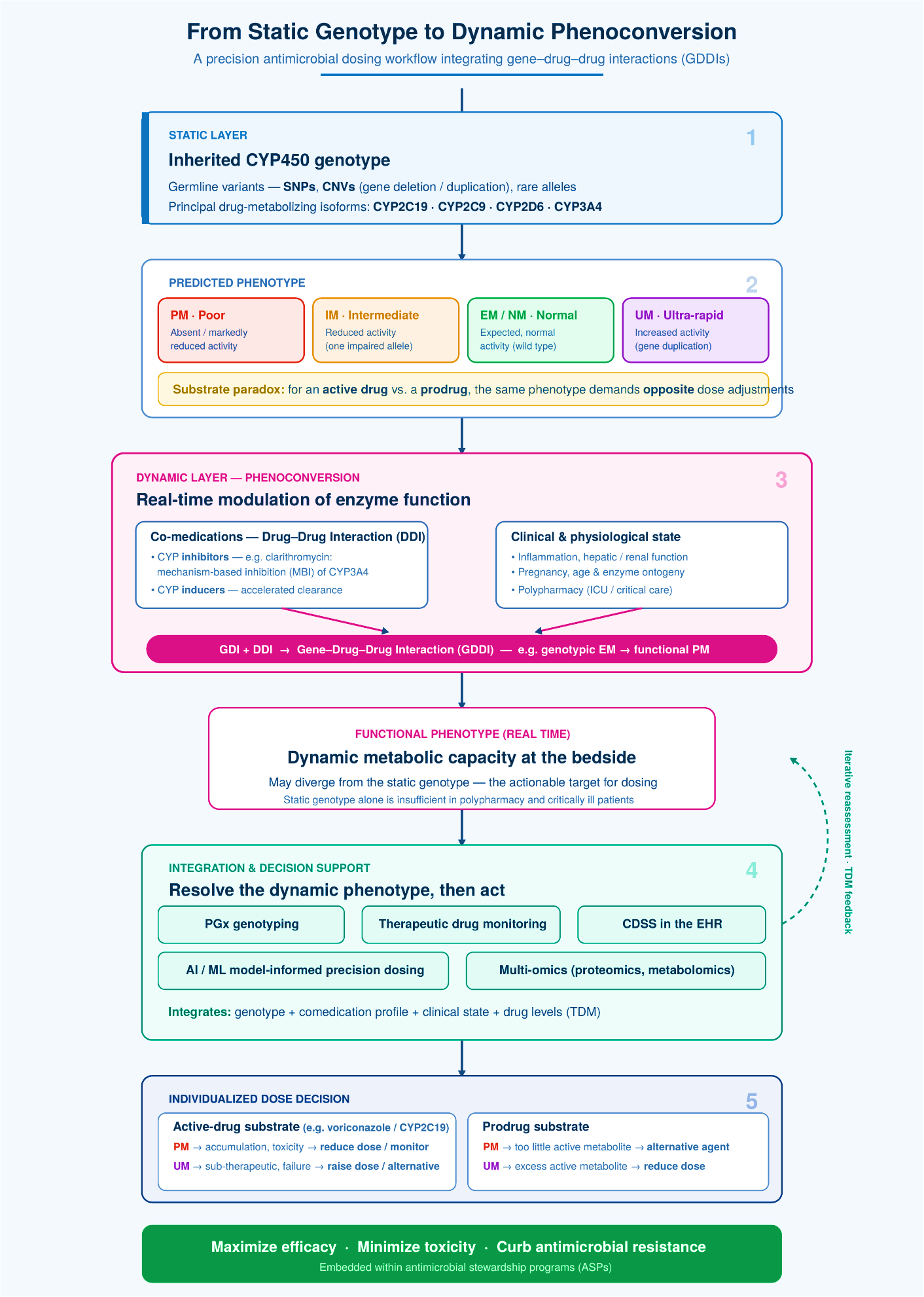
Translational workflow from static germline CYP450 genotype to dynamic phenoconversion in precision antimicrobial dosing. A multi-tiered conceptual framework illustrating the clinical translation of pharmacogenomic and pharmacokinetic principles into individualized bedside antimicrobial dosing, bridging static germline genetics and dynamic clinical perturbations across five integrated operational layers. Layer 1 (Static Layer — Inherited CYP450 Genotype): Represents the patient's fixed germline genetic architecture, encompassing single nucleotide polymorphisms (SNPs), copy number variations (CNVs; gene deletions and multiallelic duplications), and rare unannotated variants across the four principal drug-metabolizing CYP isoforms: CYP2C19, CYP2C9, CYP2D6, and CYP3A4. Layer 2 (Predicted Phenotype & The Substrate Paradox): Delineates the translation of inherited diplotypes into predicted baseline metabolizer phenotypes: poor (PM; absent/markedly reduced activity), intermediate (IM; reduced activity), normal/extensive (NM/EM; expected wild-type activity), and ultra-rapid (UM; gene duplication-mediated increased activity). The highlighted callout emphasizes the fundamental
Search Strategy and Selection Criteria
This narrative review synthesizes contemporary biomedical evidence retrieved through structured literature queries across PubMed/MEDLINE, Embase, Scopus, Web of Science, and the Cochrane Library for peer-reviewed studies published between January 2015 and 2026, with prioritized focus on investigations published from 2020 onward. Search syntax utilized Boolean combinations of relevant MeSH terms and keywords, including: ("Cytochrome P450" OR "CYP450" OR "CYP2C19" OR "CYP3A4" OR "CYP2D6" OR "CYP2C9") AND ("pharmacogenomics" OR "pharmacogenetics" OR "phenoconversion" OR "gene-drug interaction" OR "drug-drug interaction") AND ("antimicrobial" OR "antibiotic" OR "antifungal" OR "voriconazole" OR "clarithromycin" OR "rifampin" OR "linezolid"). Manual cross-referencing of bibliographies from retrieved articles and clinical consensus statements (e.g., Clinical Pharmacogenetics Implementation Consortium [CPIC] and Dutch Pharmacogenetics Working Group [DPWG]) identified additional relevant sources. Methodological priority was accorded to systematic reviews, meta-analyses, consensus pharmacogenomic guidelines, and prospective pharmacokinetic/pharmacodynamic clinical trials; case reports and narrative reviews were cited selectively to elucidate rare or emerging toxicological mechanisms. In accordance with SANRA (Scale for the Assessment of Narrative Review Articles) quality guidelines, this review presents explicit therapeutic aims, describes comprehensive search parameters, maintains rigorous citation of primary literature throughout, and integrates structured analytical evidence within the accompanying table and figure.
Fundamentals of CYP450 Enzymes
Structure and Function of CYP450 Isoenzymes
Cytochrome P450 enzymes derive their name from their characteristic spectrophotometric absorption maximum at 450 nm when their reduced heme iron is complexed with carbon monoxide. Structurally, CYP450 enzymes are membrane-bound, b-type heme-containing monooxygenases located primarily within the endoplasmic reticulum and inner mitochondrial membrane. During their catalytic cycle, they activate molecular dioxygen, inserting one oxygen atom into the lipophilic substrate and reducing the second atom to water14. This catalytic cascade is sustained by electron transfer from reduced nicotinamide adenine dinucleotide phosphate (NADPH) via the flavoprotein NADPH-cytochrome P450 oxidoreductase (POR)15. CYP enzymes feature remarkably malleable substrate-binding pockets, enabling the stereospecific biotransformation of structurally disparate molecules, including xenobiotics, steroid hormones, vitamins, and procarcinogens15. This oxidative flexibility is essential for converting hydrophobic antimicrobial agents into hydrophilic derivatives amenable to excretion16.
Classification of Major CYP450 Families
The human CYP superfamily is classified into evolutionary families and subfamilies based on amino acid sequence homology (designated by family number, subfamily letter, and individual gene number; e.g., CYP3A4). Xenobiotic and drug biotransformation is predominantly mediated by enzymes belonging to the CYP1, CYP2, and CYP3 families17.
CYP3A4: Quantitatively the most abundant CYP enzyme in both the adult human liver (~30% of total hepatic CYP content) and intestinal epithelium (~70% of mucosal CYP content), CYP3A4 is responsible for metabolizing approximately 50% of all clinically prescribed therapeutic drugs18. Its vast, flexible active site accommodates structurally diverse substrates, rendering it extraordinarily susceptible to both competitive and mechanism-based drug interactions across multiple antimicrobial classes18.
CYP2D6: Although accounting for only 2% to 4% of total hepatic CYP protein content, CYP2D6 metabolizes 20% to 25% of clinically used medications, including extensive arrays of antidepressants, antipsychotics, antiarrhythmics, and beta-blockers. Uniquely among the primary drug-metabolizing CYPs, CYP2D6 is virtually non-inducible by xenobiotics, meaning its clinical variability is predominantly governed by extensive inherited polymorphism and competitive pharmacological inhibition19.
CYP2C Subfamilies (CYP2C9 and CYP2C19): Constituting approximately 20% of hepatic CYP content, the CYP2C subfamily mediates the biotransformation of numerous clinically essential drugs with narrow therapeutic windows across cardiology, neurology, and infectious diseases20. CYP2C9 clears agents such as warfarin, phenytoin, and sulfamethoxazole, whereas CYP2C19 is the principal enzyme governing the metabolic clearance of the triazole antifungal voriconazole, proton pump inhibitors, and the antiplatelet prodrug clopidogrel20.
Mechanisms of Drug Metabolism (Phase I Biotransformation)
Phase I functionalization reactions catalyzed by CYP monooxygenases introduce or unmask polar functional groups (-OH, -NH, -SH, or -COOH), modifying substrate physicochemical properties and preparing the molecule for Phase II synthetic conjugation21. Depending on the intrinsic chemical structure of the xenobiotic and the specific metabolic pathway involved, CYP biotransformation produces two opposing pharmacological outcomes:
Detoxification: The primary and most favorable pathway, whereby a biologically active, lipophilic antimicrobial agent is converted into an inactive, more polar, and readily excretable metabolite22.
Bioactivation: The enzymatic conversion of an inactive or weakly active parent drug (a prodrug) into its therapeutically active form, or alternatively, the conversion of a benign parent compound into a chemically reactive, electrophilic, or cytotoxic metabolite23.
Because CYP enzymes are concentrated within hepatic parenchyma, altered metabolic capacity directly influences liver homeostasis. When genetically impaired enzyme clearance (poor metabolizer status) or potent co-medication-induced enzymatic inhibition halts primary detoxification pathways, systemic parent drug concentrations escalate dramatically. Concurrently, if metabolic shunting into minor secondary oxidative pathways generates reactive metabolites, the risk of severe, idiosyncratic, or dose-dependent hepatotoxicity increases substantially24,25.
Genetic Polymorphisms in CYP450
Types of Genetic Variants (SNPs, CNVs, Rare Mutations)
Inherited functional variability across the CYP superfamily arises from diverse genomic alterations. Single nucleotide polymorphisms (SNPs) are the most frequent variations, involving single-base substitutions within coding exons, promoter/enhancer elements, intron-exon splice junctions, or untranslated regions (UTRs)26. SNPs can diminish enzymatic activity by disrupting substrate binding, altering protein folding, causing premature transcriptional termination, or creating aberrant mRNA splice variants. Concurrently, copy number variations (CNVs)—encompassing complete whole-gene deletions, duplications, or higher-order multiduplications—exert major structural effects27. In the case of CYP2D6, CNVs range from whole-gene deletions (e.g., the non-functional CYP2D6*5 allele) to multi-copy gene duplications (e.g., CYP2D6*1xN, *2xN), which generate the ultra-rapid metabolizer phenotype28. Less frequent genetic lesions, such as insertions, deletions (indels), and variable number tandem repeats (VNTRs), further expand this functional heterogeneity, underscoring the necessity of comprehensive genomic profiling to accurately predict individual drug clearance29.
Geographic and Ethnic Variability in Polymorphisms
The population distribution of CYP variant alleles is marked by pronounced geospatial and ancestral stratification. A prominent example is the distribution of loss-of-function alleles in CYP2C19 (primarily *2 and *3): the prevalence of the poor metabolizer phenotype reaches 13% to 23% in East Asian populations, compared to merely 2% to 5% in European (Caucasian) cohorts30. This substantial genetic divergence has direct clinical ramifications for antimicrobials with narrow therapeutic indices that rely heavily on CYP2C19 clearance, most notably the antifungal voriconazole31. The persistence of ancestral divergence highlights a critical blind spot in the current biomedical evidence base, which remains heavily derived from single-ancestry cohorts of European descent. Extrapolating dosing guidelines established in low-prevalence populations to high-prevalence ancestral groups can lead to under-recognition of poor metabolizers, precipitating severe toxicity. Conversely, failing to recognize high-frequency ultra-rapid alleles in other cohorts promotes subtherapeutic dosing and microbiological failure. Resolving these disparities necessitates the conduct of multi-ethnic prospective pharmacogenomic trials that capture diverse global populations32.
Phenotypic Classifications: Poor, Intermediate, Extensive, and Ultra-Rapid Metabolizers
Clinical pharmacogenomics translates an individual's inherited diplotype into an assigned activity score and predicted metabolic phenotype to guide personalized pharmacotherapy:
Normal Metabolizers (NMs) / Extensive Metabolizers (EMs): Individuals possessing two fully functional wild-type alleles (activity score typically 2.0), displaying standard baseline clearance and expected therapeutic drug exposure33.
Intermediate Metabolizers (IMs): Individuals carrying one fully functional allele paired with a reduced-function or non-functional allele, or two reduced-function alleles (activity score typically 0.5–1.0), resulting in decreased clearance capacity34.
Poor Metabolizers (PMs): Individuals homozygous or compound heterozygous for loss-of-function alleles (activity score 0), exhibiting severely compromised or absent enzymatic clearance. For active drugs, this deficiency causes systemic drug accumulation and heightened risk of concentration-dependent toxicity; for prodrugs, it precludes adequate generation of the therapeutic moiety, culminating in clinical failure35.
Ultra-Rapid Metabolizers (UMs): Individuals carrying duplicated or multiplied functional alleles (activity score >2.0) or specific promoter gain-of-function variants (e.g., CYP2C19*17), conferring markedly elevated metabolic clearance. For active drugs, ultra-rapid clearance leads to subtherapeutic systemic concentrations and therapeutic failure; for prodrugs, accelerated biotransformation causes rapid accumulation of active metabolites and heightened toxicity6.
This fundamental divergence—wherein the same metabolizer phenotype produces opposite clinical consequences depending on whether the parent drug is an active moiety or an inactive prodrug—is designated the "substrate paradox"36. Recognizing this paradox is essential for clinical decision-making, as the appropriate therapeutic adjustment (dose reduction versus dose escalation, or drug substitution) must be inverted based on the drug's metabolic activation requirements. The clinical consequences of these phenotypes are summarized in Table 1 (located after the References section)12,34,37,38.
Clinical consequences of Cytochrome P450 (CYP450) metabolizer phenotypes across active antimicrobial substrates and prodrugs.
| Phenotype | Enzymatic Activity & Genotypic Definition | Clinical Impact (Active Drug Substrate) | Clinical Impact (Prodrug Substrate) | Representative Clinical Example |
|---|---|---|---|---|
| Poor Metabolizer (PM) | Absent or profoundly decreased catalytic function; homozygous or compound heterozygous for loss-of-function null alleles (activity score = 0) | Severely reduced clearance; marked systemic accumulation; elevated AUC and trough concentrations; substantial risk of concentration-dependent toxicity and ADRs | Impaired or absent bioactivation; subtherapeutic active metabolite generation; high probability of therapeutic failure | |
| Intermediate Metabolizer (IM) | Decreased catalytic function; heterozygous for one functional and one null allele, or carrying two partially functioning/hypomorphic alleles (activity score = 0.5–1.0) | Moderately reduced clearance; elevated systemic concentrations; moderate risk of adverse drug reactions requiring close monitoring | Suboptimal bioactivation; attenuated active metabolite generation; potential for compromised therapeutic efficacy | |
| Extensive Metabolizer (EM) / Normal Metabolizer (NM) | Fully intact, normal baseline catalytic activity; homozygous for wild-type functional alleles (activity score = 1.5–2.0) | Standard metabolic clearance; expected therapeutic drug exposure; predictable target concentration achievement under standard dosing guidelines. | Normal rate of bioactivation; expected active metabolite concentration; standard therapeutic response. | |
| Ultra-Rapid Metabolizer (UM) | Markedly increased catalytic activity; presence of duplicated or multiplied functional alleles (gene duplications/CNVs) or enhanced promoter variants (e.g., | Accelerated clearance; severely reduced systemic exposure and trough concentrations; substantial risk of subtherapeutic failure and antimicrobial resistance selection | Rapid and excessive bioactivation; supratherapeutic active metabolite formation; heightened risk of metabolite-driven toxicity |
Antibiotics and CYP450 Metabolism
The pharmacokinetic interplay between antimicrobial agents and the CYP450 enzyme network is multifaceted, as antimicrobials may function as metabolic substrates, potent inhibitors, or robust inducers39.
Antimicrobials as Substrates, Inhibitors, or Inducers of CYP450
Substrates: The antimicrobial molecule relies on CYP-mediated oxidation for its systemic clearance (e.g., voriconazole clearance by CYP2C19 and CYP3A4). In this context, the patient's germline genotype directly dictates antimicrobial elimination rates and half-life40,41.
Inhibitors: The antimicrobial impairs the catalytic activity of specific CYP isoforms through competitive, non-competitive, or mechanism-based inactivation, reducing the clearance of co-administered substrates and elevating their systemic exposure42.
Inducers: The antimicrobial upregulates CYP gene transcription via nuclear receptor pathways, accelerating the clearance of co-administered substrates and predisposing to therapeutic failure43.
Key CYP450-Isoform–Drug Interactions
CYP3A4 and Macrolides
Macrolide antibiotics provide a classic, clinically perilous model of CYP-mediated drug interactions. Erythromycin and clarithromycin—both 14-membered lactone ring macrolides—act as potent, quasi-irreversible inhibitors of CYP3A4 through mechanism-based inhibition (MBI), also known as suicide or time-dependent inhibition. During CYP3A4-mediated oxidation, the tertiary amine on the desosamine sugar undergoes metabolic nitrosoalkane generation. This reactive nitroso metabolite forms a stable, covalent-like metabolic intermediate complex (MIC) with the divalent heme iron within the CYP3A4 catalytic pocket, sterically and chemically inactivating the enzyme44.
Because the enzyme is irreversibly inactivated, simple temporal spacing of drug administration does not prevent this DDI; metabolic clearance remains suppressed until de novo CYP3A4 protein is synthesized, a process requiring several days following macrolide discontinuation45. Consequently, co-administering clarithromycin or erythromycin with narrow-therapeutic-index CYP3A4 substrates can precipitate catastrophic clinical outcomes, such as warfarin potentiation causing life-threatening hemorrhage (elevated International Normalized Ratio [INR]) or massive accumulation of HMG-CoA reductase inhibitors (e.g., simvastatin, atorvastatin) triggering fatal rhabdomyolysis and acute kidney injury46. In contrast, the azalide azithromycin (possessing a 15-membered ring) does not form the inactivating nitroso intermediate, exhibiting negligible CYP3A4 inhibition and offering a far safer drug interaction profile. Recognition of macrolide-induced MBI is vital: clinical risk mitigation requires proactive drug substitution (e.g., selecting azithromycin) or preemptive suspension and intensive dose reduction of the co-administered substrate until metabolic recovery occurs47.
CYP1A2/CYP2C9 Pathways and Antimicrobial Coregulation
Although most fluoroquinolones undergo predominantly renal clearance, specific congeners—most notably ciprofloxacin—are potent competitive inhibitors of CYP1A2, substantially suppressing the clearance of co-substrates such as theophylline, tizanidine, and caffeine48. The ciprofloxacin–tizanidine interaction represents one of the most severe, high-risk DDIs in clinical practice. In a seminal pharmacokinetic interaction trial, ciprofloxacin co-administration increased tizanidine AUC approximately 10-fold and peak plasma concentrations 7-fold, producing profound mean decreases in systolic blood pressure (~35 mmHg), severe sedation, and psychomotor impairment48. Real-world pharmacovigilance data substantiate this hazard: retrospective cohort studies have identified a significant risk of severe, symptomatic hypotension when tizanidine is combined with ciprofloxacin compared to non-interacting muscle relaxants (odds ratio [OR] 1.60), while FAERS disproportionality analyses indicate an adjusted reporting odds ratio (ROR) of ~2849. Similar toxic accumulation occurs with theophylline, predisposing patients to fatal arrhythmias and status epilepticus49. Concurrently, reduced-function alleles in CYP2C9 (such as *2 and *3) produce intermediate or poor metabolizer phenotypes, elevating systemic exposure to substrates such as warfarin and phenytoin; poor metabolizers require empiric starting dose reductions of up to 50% to prevent toxicity12. Furthermore, because several fluoroquinolones independently prolong the cardiac QT interval, combining them with CYP2C9 substrates that also prolong repolarization creates synergistic arrhythmogenic hazards12.
CYP2C19 and Azoles
The clinical imperative for pharmacogenomic-guided dosing is most clearly demonstrated by voriconazole (VRZ), a second-generation triazole antifungal essential for the treatment and prophylaxis of invasive fungal infections (IFIs), including invasive aspergillosis50. Voriconazole undergoes extensive hepatic clearance, primarily catalyzed by CYP2C19, with secondary contributions from CYP3A4 and CYP2C940. Genetic polymorphism in CYP2C19 is the dominant source of voriconazole's non-linear, highly unpredictable pharmacokinetics, directly governing trough concentrations (C), which tightly correlate with clinical success and toxicity40.
Poor Metabolizers (PMs): In CYP2C19 PMs, deficient clearance results in marked voriconazole accumulation, yielding elevated C levels (>5.0–6.0 mg/L) that dramatically increase the risk of severe concentration-dependent adverse events, including hepatotoxicity (elevated transaminases, cholestasis), visual disturbances, and florid neurotoxicity (hallucinations, encephalopathy)51.
Ultra-Rapid Metabolizers (UMs): Conversely, UMs eliminate voriconazole with extreme rapidity, frequently failing to achieve target therapeutic troughs (>1.0–2.0 mg/L) despite adherence to standard dosing regimens, resulting in documented microbiological and clinical treatment failure in patients with lethal invasive mycoses52. The voriconazole–CYP2C19 axis thus represents a primary clinical paradigm where preemptive pharmacogenomic genotyping, combined with therapeutic drug monitoring (TDM), is essential to tailor individual dosing regimens52.
CYP2D6 and Linezolid / Other Classes
Primary Pharmacokinetic Metabolism: CYP2D6 metabolizes a large proportion of non-antimicrobial clinical drugs but plays a minimal role in direct antibiotic clearance. For example, linezolid—an oxazolidinone active against multidrug-resistant Gram-positive pathogens—is cleared primarily through non-enzymatic morpholine ring oxidation, with minor oxidative contributions from CYP2J2, CYP4F2, and CYP1B1, leaving major hepatic CYPs largely uninvolved in its primary elimination53.
Secondary Pharmacodynamic and Polypharmacy Risk: Although linezolid does not depend on CYP2D6 for clearance, it functions as a weak, reversible, non-selective monoamine oxidase inhibitor (MAOI). In hospitalized patients receiving complex polypharmacy, linezolid is frequently co-prescribed with psychiatric medications (e.g., SSRIs, SNRIs, tricyclic antidepressants), many of which are cleared primarily by CYP2D654. In a patient who is a genotypic CYP2D6 poor metabolizer, baseline plasma concentrations of the co-administered antidepressant are substantially elevated. Superimposing linezolid's MAO-inactivating activity onto this elevated substrate pool creates an acute pharmacodynamic hazard for precipitated serotonin toxicity (serotonin syndrome)55,56. Population-based cohort analyses in older outpatients observed an overall serotonin syndrome incidence below 0.5% with concurrent antidepressants57, and large hospital cohorts report low absolute rates (0.06% by Sternbach criteria; 0% by Hunter criteria)58. Nevertheless, literature-wide estimates range from 0.5% to 18% depending on diagnostic sensitivity. Because serotonin syndrome is potentially lethal, CYP2D6 poor metabolizer status functions as an important pharmacokinetic modifier of a predominantly pharmacodynamic toxicological interaction59.
Rifamycins and Antiretroviral/Antiviral CYP Boosters
In addition to substrate and inhibitor dynamics, two pharmacological classes represent the most potent CYP modulators in infectious disease practice. Rifampin (rifampicin), the backbone of antituberculosis regimens, is a prototypical, potent pan-CYP inducer. Rifampin binds and activates the nuclear pregnane X receptor (PXR), markedly upregulating the transcription of CYP3A4, CYP2C9, and CYP2C19, as well as Phase II transferases and the efflux transporter P-glycoprotein. This transcriptional surge accelerates the metabolic elimination of co-administered substrates (including azole antifungals, protease inhibitors, oral anticoagulants, and calcineurin inhibitors), predisposing patients to profound subtherapeutic exposure and therapeutic collapse. This scenario is particularly dangerous in tuberculosis–staphylococcal or tuberculosis–fungal co-infections, where rifampin undermines concurrent CYP3A4-dependent therapies. Conversely, pharmacokinetic "boosters" utilized in HIV and viral hepatitis regimens—notably ritonavir and cobicistat—are potent, mechanism-based inhibitors of CYP3A4. They are intentionally co-formulated to suppress the first-pass and systemic clearance of primary antivirals, raising their systemic exposure. When patients receiving boosted regimens require concomitant antimicrobials (e.g., macrolides, triazoles), severe GDDI cascades emerge. This risk reaches its peak in patients with HIV/TB co-infection, who are simultaneously exposed to rifamycin-mediated induction and booster-mediated inhibition across intersecting metabolic pathways. Incorporating rifamycins and pharmacokinetic boosters into clinical evaluation is indispensable for comprehensive CYP450-guided antimicrobial precision dosing.
Clinical Implications of CYP450 Variability in Antibiotic Therapy
Impact on Efficacy (Therapeutic Failures, Resistance)
Genetic variability in CYP450 enzymes directly compromises antimicrobial efficacy. When an active antimicrobial substrate is administered to an ultra-rapid metabolizer (UM), accelerated metabolic clearance prevents systemic and tissue concentrations from achieving or maintaining the target PK/PD threshold (e.g., fT > MIC or AUC/MIC), leading to persistent infection and clinical treatment failure30. Conversely, when a prodrug is prescribed to a poor metabolizer (PM), impaired bioactivation restricts active metabolite formation below the threshold required for antimicrobial efficacy60.
Beyond individual treatment failure, this pharmacokinetic shortfall has profound public health implications. Exposing pathogens to subtherapeutic antimicrobial concentrations creates an ideal selective environment for the de novo emergence and enrichment of drug-resistant mutants. Subtherapeutic exposure substantially accelerates the evolution and dissemination of antimicrobial resistance globally. Consequently, optimizing antimicrobial dosing via pharmacogenomic principles represents not only an individualized patient-safety measure, but a critical public health strategy to curb AMR selection61.
Impact on Safety (Toxicity, Adverse Reactions)
The most acute clinical hazard of CYP polymorphism is concentration-dependent toxicity in poor metabolizers. When active antimicrobials are cleared slowly (e.g., voriconazole accumulation in CYP2C19 PMs), supratherapeutic drug accumulation predictably triggers severe adverse reactions62. These toxicities encompass life-threatening neurotoxicity (encephalopathy, visual hallucinations), severe drug-induced liver injury (cholestatic or hepatocellular damage), and cardiac electrophysiological disturbances (QTc prolongation predisposing to torsades de pointes)63. Conversely, for prodrugs, ultra-rapid metabolizers face heightened toxicity risks due to the rapid, unregulated generation of active or reactive metabolites. Furthermore, this risk is dramatically amplified when co-medications trigger phenoconversion (shifting a genotypic EM to a functional PM) in multimorbid patients receiving polypharmacy64.
Pediatric vs. Adult Variability in Response
Applying adult pharmacogenomic data directly to pediatric populations is confounded by enzyme ontogeny—the developmental maturation of metabolic enzymes from gestation through adolescence. The hepatic expression and catalytic activity of major CYP enzymes are immature at birth, particularly in preterm neonates and young infants65. Consequently, young infants often function as phenotypic poor metabolizers regardless of their inherited germline genotype, requiring conservative weight-based dosing66. As children mature, these enzymes undergo rapid developmental upregulation, establishing the inherited genotype as a permanent determinant of drug clearance. Because pediatric patients frequently receive higher weight-adjusted doses (mg/kg) and undergo rapid developmental transitions, unrecognized poor or ultra-rapid phenotypes can cause severe toxicity or rapid treatment failure, providing a compelling rationale for preemptive pharmacogenomic testing in pediatric specialty care66,67.
Enzyme ontogeny follows isoform-specific maturation curves that further complicate pediatric dosing. CYP3A4 activity is low at birth (~30%–40% of adult levels), rises rapidly over the first months of life, and achieves adult-equivalent activity by 6 to 12 months, with some cohorts demonstrating a transient childhood overshoot exceeding adult clearance before stabilizing post-puberty. In contrast, CYP2C19 matures more slowly: neonatal activity is minimal, increases gradually during infancy, and does not reliably achieve adult functional capacity until 1 to 5 years of age. Thus, a genotypic CYP2C19 normal metabolizer may clinically behave as a functional poor metabolizer throughout early infancy. These divergent developmental timelines preclude uniform pediatric dose-extrapolation rules, necessitating age- and isoform-specific dosing frameworks.
Hospitalized vs. Outpatient Populations
Hospitalized patients, particularly those admitted to intensive care units (ICUs), are uniquely vulnerable to adverse outcomes driven by CYP variability. Critically ill individuals frequently present with dynamic organ dysfunction (acute kidney injury, hepatic congestion), altered capillary permeability, hypoalbuminemia, and massive polypharmacy68. The concurrent administration of multiple enzyme inhibitors or inducers substantially increases the incidence of drug-induced phenoconversion. For instance, when an ICU patient concurrently receives a potent CYP2D6 inhibitor and a strong CYP3A4 inhibitor (e.g., clarithromycin), an extensive multi-pathway metabolic blockade is established. In this environment, dynamic phenoconversion represents an immediate clinical threat that eclipses the static genotype. Conversely, while ambulatory outpatients experience lower rates of polypharmacy, they are monitored less frequently with laboratory testing; unrecognized poor metabolizer status can silently culminate in serious, unmonitored toxicities before clinical detection occurs69.
Advances in Pharmacogenetic Testing
Available Genotyping Platforms for CYP450
Technological innovations over the past decade have dramatically improved the analytical speed, accuracy, and affordability of pharmacogenomic (PGx) testing. Contemporary platforms—ranging from targeted TaqMan allelic discrimination assays and digital droplet PCR to multiplexed mass spectrometry arrays and next-generation sequencing (NGS) panels—interrogate the full spectrum of clinically annotated CYP variants, including SNPs, indels, and CNVs across CYP2D6, CYP2C19, CYP2C9, and CYP3A470. Although these platforms deliver high analytic fidelity in defining germline diplotypes, translating a static laboratory genotype into a real-time, actionable bedside phenotype in a patient receiving multiple interacting medications remains a substantial clinical challenge71.
Clinical Decision Support Tools and Algorithms
Bridging the gap between raw genomic data and bedside prescribing requires automated Clinical Decision Support Systems (CDSS) embedded within Electronic Health Record (EHR) platforms. Modern CDSS tools cross-reference inherited genotype data against pharmacogenomic guidelines (e.g., CPIC, DPWG), delivering interruptive alerts and tailored dosing recommendations directly into the physician's ordering interface72. However, conventional first-generation CDSS platforms are fundamentally limited: they analyze gene–drug interactions in isolation, failing to account for multi-drug regimens or dynamic phenoconversion. Next-generation clinical algorithms must incorporate real-time medication administration records, drug–drug interaction engines, and fluctuating physiological variables (e.g., systemic inflammation, renal/hepatic clearance markers) to compute a patient's true "dynamic phenotype" at the bedside35.
Cost-Effectiveness and Accessibility Issues
Despite substantial clinical promise, widespread clinical adoption of preemptive PGx testing faces persistent economic and logistical barriers. Although sequencing chemistry costs have dropped, the institutional investment required to establish, validate, and maintain clinical-grade informatics infrastructure and train healthcare providers remains significant73. Outside of high-evidence exemplars such as voriconazole/CYP2C19, health-economic models demonstrate mixed cost-effectiveness across general antimicrobial prescribing, often secondary to variable test turnaround times and discordant guideline recommendations74. Furthermore, inequities in testing access persist: advanced PGx infrastructure is disproportionately concentrated in tertiary academic medical centers, raising global health-equity concerns regarding access for rural and underserved patient populations75.
Personalized and Precision Medicine in Antibiotic Use
Incorporating Pharmacogenetics into Prescribing Guidelines
To realize the full clinical promise of precision antimicrobial therapeutics, validated pharmacogenomic recommendations must be formally codified within institutional and international clinical practice guidelines. Currently, clinical guidelines with definitive, actionable dosing recommendations are restricted to a select group of established antimicrobial agents (e.g., CPIC and DPWG guidelines for voriconazole based on CYP2C19 genotype)76. Guidelines should mandate preemptive testing for narrow-therapeutic-index substrates in high-risk populations (PMs and UMs) to guide dose adjustments or prompt substitution with alternative non-CYP-cleared antimicrobials. Transitioning from reactive genotyping (ordered only after treatment failure or toxicity manifests) to preemptive multi-gene screening before therapy initiation is essential to optimize clinical outcomes77.
Integration with Antimicrobial Stewardship Programs
Antimicrobial Stewardship Programs (ASPs) are established hospital structures tasked with optimizing antimicrobial selection, dosing, and duration to improve clinical cure rates, minimize toxicity, and curb the emergence of antimicrobial resistance. Integrating pharmacogenomic (PGx) stewardship into established ASP workflows represents a powerful synergy78. PGx-informed stewardship teams—comprising infectious disease physicians, clinical pharmacologists, and clinical pharmacists—can proactively screen high-risk antimicrobial orders, evaluate intersecting drug–gene and drug–drug interactions, and recommend personalized dosing regimens prior to therapy initiation79.
Role of AI and Clinical Decision-Making Systems
Managing the computational complexity of polypharmacy, physiological fluctuations, and intersecting GDDIs necessitates advanced analytic tools. Model-informed precision dosing (MIPD) platforms increasingly utilize artificial intelligence (AI) and machine learning (ML) architectures80. Machine learning models can synthesize high-dimensional clinical datasets, integrating an individual's static CYP450 genotype, dynamic hepatic/renal function biomarkers, real-time co-medication profiles, and therapeutic drug monitoring (TDM) levels81. This capability allows AI systems to transcend rigid rules-based alerts, dynamically predicting individual drug clearance trajectories and the net impact of competing inhibition and induction pathways. This computational integration establishes a foundation for adaptive, predictive dosing regimens that simultaneously prevent concentration-dependent toxicity and treatment failure82.
Pharmacogenomics and Phenoconversion in Advanced and Cell-Based Therapies
The clinical principles of CYP-mediated pharmacokinetics extend directly into advanced therapy medicinal products (ATMPs) and cellular therapeutics. Recipients of chimeric antigen receptor (CAR) T-cell therapy, allogeneic hematopoietic stem cell transplantation (HSCT), and solid organ transplantation are maintained on long-term immunosuppressive regimens (calcineurin inhibitors such as tacrolimus and cyclosporine; mTOR inhibitors such as sirolimus), which are narrow-therapeutic-index CYP3A4 substrates. Concurrently, profound immunosuppression renders these patients highly susceptible to opportunistic bacterial and fungal infections, necessitating intensive prophylaxis with CYP3A4-interacting antimicrobials and antifungals (e.g., voriconazole, posaconazole, clarithromycin). This convergence creates severe GDDI risks: for example, co-administering voriconazole with tacrolimus can increase tacrolimus trough concentrations several-fold via potent CYP3A4 inhibition, necessitating empirical 60% to 75% tacrolimus dose reductions and intensive TDM to prevent acute nephrotoxicity and neurotoxicity. While engineered cellular products are not themselves CYP substrates, their supportive pharmacotherapy is tightly linked to CYP450 metabolism. Incorporating CYP pharmacogenomics and phenoconversion surveillance into clinical oncology and cellular therapy pathways represents an essential frontier for precision antimicrobial management.
Challenges and Future Directions
Limitations in Current Evidence and Clinical Utility
Although the clinical utility of pharmacogenomics is firmly established for select antimicrobials such as voriconazole, robust clinical endpoint evidence (mortality reduction, shortened hospital stay, resistance mitigation) remains sparse for many commonly used antibacterial agents. Furthermore, static germline testing fails to capture the dynamic reality of in vivo drug metabolism: fluctuating co-medications, evolving systemic inflammation, organ failure, and environmental factors can rapidly alter metabolic phenotype over time. Reconciling static genetic data with dynamic clinical changes requires the seamless integration of preemptive genotyping, continuous TDM, and responsive decision-support algorithms.
Opportunities for AI-Driven Prediction Models and Multi-Omics Integration
The future of precision antimicrobial dosing lies in integrating pharmacogenomics with multi-omics profiling. Combining genomics with quantitative proteomics, metabolomics, and epigenomics provides an integrated assessment of an individual's real-time metabolic capacity77,78,83,86. In particular, targeted quantitative proteomics (e.g., liquid chromatography–tandem mass spectrometry [LC-MS/MS]) can directly measure hepatic and intestinal CYP protein abundance, identifying discrepancies between genotype-predicted activity and actual functional enzyme expression during critical illness or severe inflammation79,85. Advanced AI architectures are uniquely equipped to process this multi-dimensional data—combining germline genomic risk, targeted proteomic quantification, real-time clinical variables, and TDM feedback—to generate high-fidelity, adaptive pharmacokinetic forecasts that facilitate preemptive, truly individualized antimicrobial therapy80,81,84,86,87.
Two translational avenues warrant particular development. First, quantitative targeted proteomics enables direct measurement of functional CYP3A4, CYP2C19, and CYP2D6 protein abundance, correcting for phenotypic divergence driven by inflammation or acute liver injury85. Second, next-generation model-informed precision dosing (MIPD) platforms, combining population pharmacokinetic models with Bayesian forecasting and machine-learning refinement, can assimilate these multi-omics inputs to compute continuous, individualized dosing trajectories80,81,84,86,87. For narrow-therapeutic-index antimicrobials, coupling genotype with proteomic profiling and Bayesian MIPD algorithms provides a clear translational pathway from static guidelines to individualized bedside precision dosing.
Conclusion
Inherited CYP450 genetic polymorphisms represent a major, clinically actionable determinant of antimicrobial pharmacokinetics, therapeutic efficacy, and patient safety. Because active drugs and prodrugs exhibit opposite pharmacokinetic consequences from the same underlying metabolizer phenotype, clinical management requires mechanistically guided, individualized prescribing. While genotype-informed dosing is firmly established for agents such as voriconazole, the clinical realities of critical illness, polypharmacy, and drug-mediated enzyme inhibition or induction demonstrate that static germline genotyping alone is insufficient. Real-time phenoconversion alters functional metabolic capacity at the bedside, transforming isolated gene–drug interactions into complex, multi-dimensional gene–drug–drug interactions. Successfully translating pharmacogenomics into routine antimicrobial therapy requires expanding clinical trials into diverse ancestral cohorts, formalizing harmonized global dosing guidelines, and embedding pharmacogenomic expertise into hospital-wide antimicrobial stewardship programs. The convergence of preemptive genotyping, therapeutic drug monitoring, multi-omics profiling, and artificial intelligence-driven precision dosing models offers a robust, scientifically grounded pathway to optimize clinical cure, minimize organ toxicity, and preserve the long-term utility of global antimicrobial therapies.
Abbreviations
AI: Artificial intelligence; AMR: Antimicrobial resistance; ASPs: Antimicrobial stewardship programs; ATMPs: Advanced therapy medicinal products; AUC: Area under the concentration–time curve; CDSS: Clinical decision support systems; CNVs: Copy number variations; C: Trough concentration; CYP450: Cytochrome P450; DDIs: Drug–drug interactions; EHRs: Electronic health records; EMs: Extensive metabolizers; GDIs: Gene–drug interactions; GDDIs: Gene–drug–drug interactions; HMG-CoA: 3-hydroxy-3-methylglutaryl-coenzyme A; ICU: Intensive care unit; IFIs: Invasive fungal infections; IMs: Intermediate metabolizers; INR: International normalized ratio; LC-MS/MS: Liquid chromatography–tandem mass spectrometry; MAOI: Monoamine oxidase inhibitor; MBI: Mechanism-based inhibition; MIC: Minimum inhibitory concentration; MIPD: Model-informed precision dosing; ML: Machine learning; NADPH: Nicotinamide adenine dinucleotide phosphate; NMs: Normal metabolizers; PGx: Pharmacogenomics; PK/PD: Pharmacokinetic/pharmacodynamic; PMs: Poor metabolizers; PXR: Pregnane X receptor; SNPs: Single nucleotide polymorphisms; SNRIs: Serotonin–norepinephrine reuptake inhibitors; SSRIs: Selective serotonin reuptake inhibitors; TDM: Therapeutic drug monitoring; UMs: Ultra-rapid metabolizers; VNTR: Variable number tandem repeat; VRZ: Voriconazole.
Acknowledgments
None.
Author’s Contributions
LGS, MKM, and HQM conceptualized the review, conducted the literature retrieval, and drafted the manuscript. All authors critically evaluated, revised, and approved the final manuscript.
Funding
The authors declare that no specific funding or financial support was received for this study.
Availability of Data and Materials
Data sharing is not applicable to this article as no original datasets were generated or analyzed during the current review. Relevant literature and sources analyzed are cited throughout the manuscript and are available from the corresponding author upon reasonable request.
Ethics Approval and Consent to Participate
Not applicable.
Consent for Publication
Not applicable.
Declaration of Generative AI and AI-Assisted Technologies in the Writing Process
The authors declare that generative AI and AI-assisted technologies were utilized prior to submission solely to refine language, improve grammatical readability, and assist in enhancing figure layout and aesthetic quality. The authors explicitly confirm that no generative AI tools were used to generate, select, synthesize, or format the reference list or any bibliographic data; all references were retrieved through the authors' independent literature search and verified manually by the human authors, who assume full responsibility for the accuracy and integrity of the scientific content.
Competing Interests
The authors declare that they have no competing financial or non-financial interests.